INTRODUCTION
Since I have been an integral part of acquiring Randolph’s military history, I felt it appropriate to add some of my comments associated therewith.
Our first contact occurred in the Spring of 2004 as the result of my posting a message regarding my uncle’s (Erwin W. Scott Jr.) service with the 517th PRCT. Randolph read it with interest as we were both located in San Antonio, Texas. Thus he emailed me and suggested that we might occasionally communicate regarding the 517th. I had become highly interested in their history as a result of a number of things: (1) my uncle never talked to his family about his military service in WWII, (2) I found out after my uncle’s death that he had given his oral history regarding his WWII service to the Admiral Nimitz Historic Site, Museum of the Pacific War in Fredericksburg, Texas, of which I was able to obtain a printed copy and (3) I had a general interest in military history as a result of my service in the United States Air Force for 45 years.
As a result of Randolph’s email, we began actively sharing of information concerning the 517th. I inquired whether or not he had documented his own military history to which he replied, no. I suggested that he consider doing it. After many months of dialogue and working with the Nimitz Museum, we were able to schedule a time and place for the taking of an oral history.
That was my first such session with the oral history process. Randolph’s story was so interesting that the session went on for three solid hours without any break. Even then we wanted to hear more but we were all ready to terminate the session for that day. Afterwards I asked Randolph if he would consider meeting me for lunch soon to which he agreed.
During our three lunches, we talked about his family, his WWII experiences, his love of bow hunting, his post WWII career, his health and other things like the current state of the world.
We found that we enjoyed each other’s company, which is why we met to continue discussions.
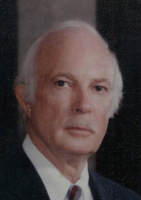
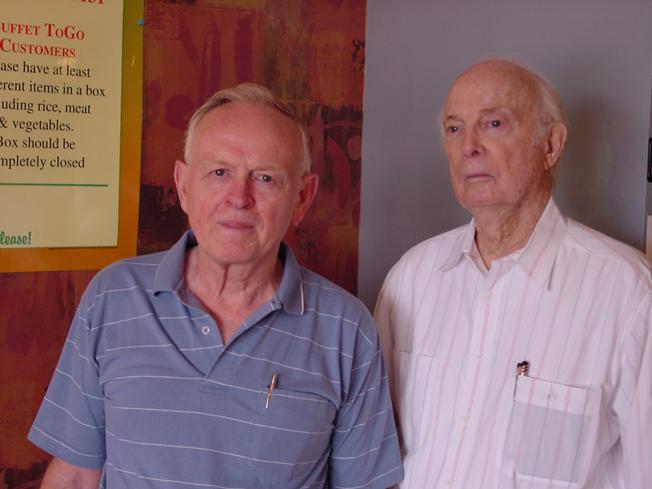
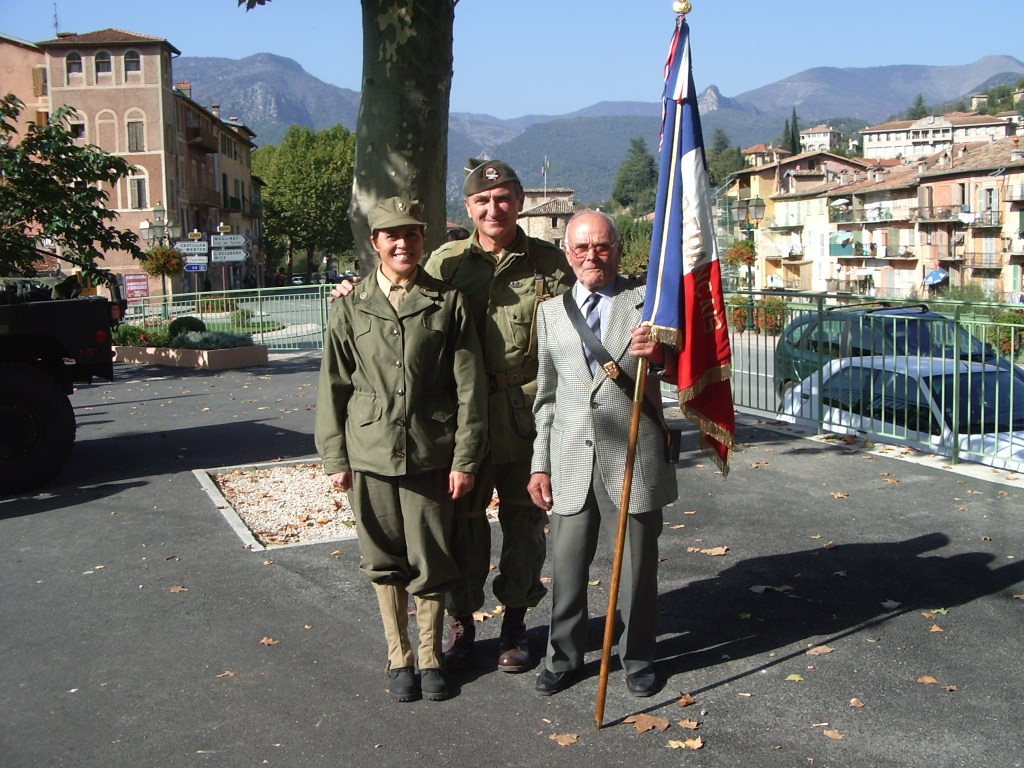
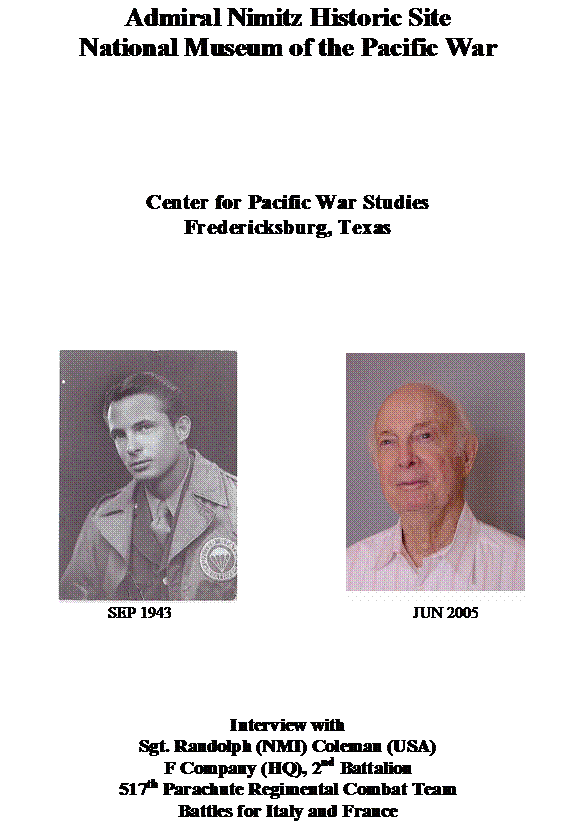
During our last lunch in June 2005, I requested that we take a few pictures which have been posted on the 517th PRCT website. He confided to me that he was not feeling well and subsequently died in a few days.
His is a story worth reading. One interesting thing he told me was that he would never attend a reunion of the 517th because he wanted to remember those men and memories the way they actually happened and not through the eyes of those still living.
Thomas Scott Atkinson
Lt. Col, USAF (Ret)
8621 Classic Oaks Lane
San Antonio, Texas 78255
PH: 210 698 9328
16 August 2006
Interview with
Sgt. Randolph Coleman (USA)
Mr. Cox My name is Floyd Cox and today is May 27, 2004. We’re here at the Embassy Suites, San Antonio, Texas to interview Mr. Randolph Coleman. With me during this interview is Mr. T. Scott Atkinson. First off Randolph I would like to shake your hand and tell you thank you for agreeing to do this interview.
We’ll start off getting a little background from you, when you were born, where you were born and when you went to school.
Mr. Coleman Ok, I was born December 21, 1922 in Corpus Christi, Texas and lived in Robstown until I was three years old. We moved back to Corpus Christi, living there for about four more years and then moved to Austin, TX. I lived there until my father passed away, when I was 13 (1936). Then we moved back to Corpus and I was there until the war. Just before the war I was in college.
Mr. Cox What high school did you go to?
Mr. Coleman I went to Corpus Christi High School, called Miller High School now. And I was in athletics more than anything else. Scholastically I wasn’t too interested. I was really interested in athletics. I graduated and then went to a military school in Kerrville, Texas. Schreiner Military Institute was the name then. I was there a year and the war came. I thought that I would go in the service any minute so I stayed close to Corpus; so I went over to Texas A&I, Kingsville. I was there a year. I tried to get into the service by volunteering at my draft board because I knew I wanted to be in paratroopers. And they said that they had very few guys that want to do that so you will have to wait. Well I thought that that meant 30 days but worked out to about a year. And finally they called me in; that was while I was at A&I studying pre-law. And then I went into the service. I believe that it was April 18, 1943.
Mr. Cox Why did you want to get in the paratroopers?
Mr. Coleman Well I’ll tell you exactly how that happened. The country had become military conscious, of course, as a result of Pearl Harbor. They had been showing shorts in movie theaters on different military things and I saw one on the paratroopers. And it seemed like a glamorous deal to me. It certainly seemed like a challenging sort of a thing, and one thing that appealed to me was to get away from the ordinary. Maybe that was some insecurity I have; but I thought that I wanted to do that, or fly an airplane. Well I didn’t think I could get in the Air Force because my eyes were not 20/20. I tried to get in and couldn’t. And so then I decided that I wanted to be a paratrooper. Sounded great to me. And watching some of those short subjects, the idea of jumping out of an airplane, being in an unusual situation, all that appealed to me. Just a part of what I am. It wasn’t really unusual for me. As a matter of fact, my uncle I believe said they expected some dumb thing like that and that’s how I did it. I will say this, the short subject movie that I saw, kind of a narrated deal, showing these guys going through basic training and going to jump school and all that. It looked to me like they were living a tremendous life, kind of a little above and beyond what the average guy was doing. I thought, hell yeah, that appeals to me. It turned out that it wasn’t that way at all; because all the time I was in the service, I never saw a sheet on a bed. I remember these guys had them in that short subject movie. It was a little bit different, as a matter of fact it was a lot different, but that was how I got interested in it. Never for one minute did I feel that I had made a mistake.
Mr. Cox Okay, let’s go back to when you finally got notification when you got accepted, where did you go?
Mr. Coleman Well, when I was accepted I was sent to San Antonio, Texas Fort Sam Houston. I interviewed with the Marines and the Navy and the Army and which ever one of those you qualified for, you went into it. I qualified for all three so I remember talking to all three of them. It was mandatory as a matter of fact. When I was talking to a marine, I asked him how about this: did they have paratroopers and he said no. But he said that’s in our future. Well I’m gong to be one of those guys that teaches you how to do it because I’m going in the Army. You know I was kind of popping off anyway, so I went in the Army. But before they shipped me out of Fort Sam, before they shipped anybody out, they had to have a carload, a railroad carload of people, going to the same place you were going. It took something over 30 days to get there, I believe, 22 guys that volunteered for the paratroopers. So I was there at Fort Sam pulling guard duty at night and KP during the day, doing all that stuff, waiting for the rest of the guys who would go in with me to show up.
When they finally did, well they sent us to Camp Toccoa, Georgia, which is in the northeastern part of Georgia. And it was the next thing to a prison camp. It gave you that impression. You knew the minute you got there you were in for a bad time. And when we got there, the very first day, there were 22 of us. At the end of that first day there were two of us left. The rest shipped out. They didn’t make it through the first day. The first day consisted of just a kind of a humiliating treatment from the time you got off the train. It was like you were really a bad convict. They had a reason for that. You did more pushups in the first hour you were there than you ever did in your life. Everything you did didn’t seem right by anybody, them saying give me 10, give me 20. Of course, it was impossible to do them. You weren’t used to that. And they got in your face; you know that kind of stuff. And Major Seitz who would later become our Battalion Commander interviewed us. He later became General Seitz. He lives in Kansas now. He interviewed me, as I’m sure he interviewed everyone one-on-one. He was very kind but very tough; I mean, he was not abusive, not like those guys that I was used to seeing when I got off the train.
I remember one question that he did ask; he remembers it now also, which is kind of funny. He said, “What would you do if I asked you to ram your fist through that wall over there?” And I said, “I would do it.” I think I wrote a letter to our web site1 to that effect. I guess he thought if I was crazy enough to do that I would be crazy enough to do any of their other stuff they asked me to do, so I qualified. The only other fellow that was there at the end of the day was a boy from San Antonio, Alfonso Trevino. And he and I were the only two of that group left. The rest of them were sent off to other infantry outfits or basic training somewhere. I don’t know whatever happened to them.
1. 517th PRCT Web Site: www.517prct.org
But we were verbally kind of abused, like you would call verbal abuse today, by these various lieutenants and sergeants. They just pushed you as hard as they could to see how much you’d take. We had to jump out of a tower, put on a sling, like a little parachute sling that you would sit in, and jump off a tower, make a left hand turn, duck your head and do some things they told us to do. And then jumped out on this rope onto a pulley and it ran you down about a couple of hundred feet. Scared the daylight out of you, but that was just the beginning. If you refused anything, when they tapped you on the leg, if you did not jump immediately, you were disqualified. If you said wait a minute, my shoe is untied or whatever. None of that. They didn’t buy into any excuses for anything. And you did that little number, and you did pushups, too, until you were blue in the face. And all kinds of double timing everywhere you went, you ran.
Mr. Cox What would you call that basic infantry with a little touch of jump school or what?
Mr. Coleman No. That was just seeing if you were going to qualify. To find out if you could qualify. This was just the barest of things. And you had no idea how hard that training is or what you have to go through to get in there. How humiliating it can be in a sense if you are very sensitive. And how obsessed you become with making it, you would kill to make it. The brainwashing they did on us eighteen or nineteen year old guys was unbelievable. And they convinced you of exactly what they wanted to convince you; that you were equal to five men anywhere, and maybe more than that. Don’t ever doubt that. And this sounds so dumb saying it now, but it worked. It worked over a period of time, we had no passes, we didn’t have weekend passes like they talk about. We didn’t have any of that stuff. We couldn’t say we were in the paratroops because we hadn’t jumped out of an airplane. We couldn’t wear the jump boots because we hadn’t jumped out of an airplane; we didn’t have any wings because we hadn’t jumped out of an airplane. We hadn’t jumped out of an airplane because we weren’t qualified to go to jump school.
So the qualifications for that was the really, really unbelievably tough basic training at Camp Toccoa, Georgia. You ran everywhere you went. There was a mountain there called Currahee that none of us will ever forget. All up hill; even coming downhill it was unbelievable, you couldn’t stop. If you ever got out of a run, you better really be beat up on that ground because if you kind of pulled over there and rolled in the grass, your next rolling over would be done in another town. If was very tough physically. Very tough physically. Unreasonably tough. On our forced marches, we would fill a canteen and march all night. One outfit marched from Toccoa to Atlanta, which is 100 miles. And they just woke them up at midnight and said here we go. And away they went. We would go on these forced marches. Fill your canteen with water and then just before you would start on the march they would say that when we get back we would all empty our canteens. Hell, we thought we would have them empty about halfway where we were going. What that deal was, that you made this forced march dying of thirst, but you didn’t drink any water. And when you came back you emptied individually your canteen and it better be full. And that kind of stuff; things you didn’t think you could do, you did. You felt very inferior to everybody around you; you were not in the same boat they were in. I had been in a military school and I knew how to do some close order drill. God, you would have thought that I was some sort of general by the end of the first week there because I could do stuff those other guys couldn’t do. It was amazing the abuse those other guys took simply because I could do a right face, a left face, about face and salute. Or something like that. Anyway it was that kind of a deal.
We had a lot of really good people in there and we had some pretty edgy people that had it not been for the war you would never have known those people in your way of life. I don’t want to make this sound like some prude or something. You could search out to some of the people you were comfortable with, and some of those guys you would not have been comfortable with; and that came out as time went on. It just showed up and some of them changed. Some of them were really troublemakers. But we were taught to be troublemakers and we went through this type training there. It’s so hard for me to talk about this because I figure that there is no way you could possibly understand this. No way. Because I don’t believe it myself. Now when I stop to think about some of the things that I did as a human being, some of the things that I did, I can’t believe I did them.
Mr. Cox You mean later in life?
Mr. Coleman Yeah, as time went on. You finally recognize, and this is not bitterness because it was necessary, but they do exactly to you the things that develop you; they change your whole mind about everything. You become pretty course and pretty tough.
Mr. Cox Almost immune to feeling don’t you?
Mr. Coleman Yeah, in a way. They don’t try to fool with that part of you so much but to let you know where it belongs in your life. Kind of put it in the right place. And everything was real tough and real physical, even between people. Guys from Texas and guys from California, where it was like that you would get a little thing going and just kind of physical stuff like that, like a high school fullback. That’s what you did.
And as time went on they checked into your background, whatever background an eighteen-year-old kid could have. If you had studied certain things, they might move you in that area, if that applied. And in my case I had been studying pre-law, and had been in a military school; so they sent me to intelligence school. I guess there was one man from each company that later became what was called Operations & Intelligence Sergeants for the company.
Mr. Cox Now did they do this before you went through jump school?
Mr. Coleman Oh yeah. You had to go through this. This was taught by a British Commando. I forget his rank but it doesn’t make any difference. He was an officer in the British commandos with combat experience and was very tough on us. It seemed that the more things I advanced to, the tougher it got. Instead of running say two miles before breakfast, we ran five in intelligence school. We just did a little more than the other guys. We had to learn the Morse code. We had to learn to use a compass and read maps.
Mr. Cox Navigating? Map reading?
Mr. Coleman It was very interesting. It was right down my alley. Even to this day I loved that map stuff. And I didn’t realize it until I got in there that I had a kind of natural feel for it. I should have known it because I’ve done nothing but hunt all my life. Been in the woods and never lost, I knew my directions. Kind of like an Indian, so to speak. And so it came to me real easily. But it was tough physically.
Anyway guys went into different things. Some guys were going to be machine gunners, some guys would handle bazookas, some would be moved over into the 460th into the artillery. We had a little artillery outfit. And mortars; we had a mortar squad in each platoon. And they would take the big guys and make them machine gunners because they had to carry all that heavy equipment. And they already had all the officers. There was no such thing as OCS. I had visions of that too, but that never came up; there was no roll call for that. All the officers were already in place. The basic need for non-commissioned officers had already been filled - you know platoon sergeants. And so the only route for advancement was in things like I was in, operations. And anyway I made corporal right off the bat.
Mr. Cox Now at this time, were you assigned to any specific unit? You weren’t in the 517th?
Mr. Coleman Yes, I was in the 517th. I was in F Company; in the first platoon. Just a regular guy there, when they put me in intelligence school. And once that happened, I was still in the Company; I still slept in the same bunk, ate there, made all the formations that I could except when I was with the other bunch, the intelligence guys. But as far as going to class – how to shoot a rifle, or how to take one apart - I was getting all that in the other school. I didn’t go to any of that with the Company but I was still in it.
When we finished the school, they formed another platoon, called Company Headquarters and I was in charge of that. And directly above me was a Company Officer. And so when we fell out on the road in the morning, instead of having three platoons out there, we had three platoons and Company Headquarters, which was not quite as big as the regular platoons. But we had radio operators and runners and just a couple of guys who were rifleman to guard our command post, where our Captain was. We were usually with the Captain. And then when we got through this training we had a glider outfit also attached to us. We were in the 17th Airborne Division; the 517th in the 17th Airborne Division - gliders, artillerymen, engineers and infantry. As the training went along, as we were told, the glider troops were not as ready as we were to do what we were going to do. So they took them away from us. They took us out of the 17th; then we became the 517th Parachute Regimental Combat Team. This was just a long-winded name for a regiment that included the Engineers, and the little artillery outfit. We were all in the same little group.
And when we finished our training in Camp Toccoa, we moved to Camp Mackall, North Carolina, near Rockingham Southern Pines. Very pretty. Very beautiful over there, but awfully hot if you had to be in the service. Beautiful golf courses. Anyway, we went from Toccoa to there and I don’t know how long - a few weeks. And then we were ready to go to Fort Benning to jump school. So they sent, I think, a battalion at a time. And we were only three battalions. They taught you all this physical stuff again. Jumping off these big high towers with parachutes on them. But they sent you up by an elevator. Actually you got in the chute and they pulled you up a couple of hundred feet. Then they’d released the chute. You had to manipulate it to keep it off that tower you just left, so the wind wouldn’t blow you into it. So they would holler at you from down on the ground, slip to the right, slip to the left.
Mr. Cox Let me ask you, how did you feel the first time you jumped, even though you were only a couple of hundred feet in the air and you were released and had a parachute?
Mr. Coleman Scared. But glad. You realized you were getting somewhere. All of this had been for a reason. And, of course, you knew that if you were going to do the real thing; you knew you better do this first. You knew you had to do it, so you did it. It was OK. It was pretty controlled. They would holler at you, telling you what you were doing wrong. Keep your knees together and bent, before you hit the ground so you could manipulate the chute and go in face first instead of backwards or something. We did that. We were there, I think, a week and they taught us to pack a parachute. That was kind of a complex thing, especially when you were not only going to pack it but you were going to jump with it. So you wanted to get it done just right, you know. The trick to packing a parachute, I mean there is a little trick to it, if you pack it very neatly and exactly by the book, your chute opens cleaner. If you’re a little sloppy, or you get a little off, you get a few things overlapping in there; it can be a real experience. I mean you find that out too, when you jump. You might think that they don’t know the difference but when you jump it, you will know the difference.
Mr. Cox Did they give you any time limits to pack a chute? Did they tell you how to do it?
Mr. Coleman Two of you pack one chute. And they made sure that you did it right, or at least reasonably right. And then came the time to jump, and everybody says you’d be the most scared on that first jump. I can tell you right now that the first jump is the easiest. Easiest jump you will ever make. And they progress in the other direction. The more you make, the more you realize that something can go wrong. And more things do go wrong. Things you hadn’t thought of, especially when you’re jumping at night and over a forest or something like that. That’s another story, because we had kind of a running problem with the Air Force. They seemed to enjoy dropping us over places that were not too comfortable. When we had a regular drop zone over a dry field, they just kind of gave a green light after they passed it. You’d be landing in a bunch of damn trees, be hanging up there in a tree.
Mr. Cox What types of aircraft were at jump school when you first started? What type of aircraft did they take you up in?
Mr. Coleman C-47s & C-3s.
Mr. Cox How many times would you jump each day?
Mr. Coleman One jump. Took five days to do it. Different elevations, the last jump we made was at the lowest elevation. They wanted you in the air the shortest period of time. And that makes sense when guys on the ground are trying to kill you before you hit the ground. And too, you can be more accurate as to where you drop. And when you jump, the first man to go out, would go out at a little higher altitude than the last man. When you jump from the plane, the pilot lifts the tail because when you’re jumping the plane sort of loses altitude. So it helps you to clear things. I was always the last guy out, what they call “kicking the stick”. When paratroopers line up in the plane, they call it a “stick”. I don’t know why. But you just put your shoulder into the guy in front of you and you just start shoving. But when you jump in jump school, it wasn’t that momentum thing. You had to stop in the door and lean out until this guy tapped you on the leg. They do that because they want you to look down there and get about as sick as you can get before you go out. They want everything tested. They want to see if you would refuse to jump. Anyway we did that one at a time. And we came through OK.
Anyway I had a bad situation with a guy who jumped after me from another plane, I guess. I’m looking down; I’m having a ball. I look up and here is this guy slipping over towards me, to my chute, and he gets in my chute, in the top of it. And I’m hollering up at him to slip right and I will slip to the left, figuring that we would separate. He thought it was funny; he just stayed with me. And of course the guys from the ground were hollering at him like crazy. If his weight had gone down in my chute, mine would have collapsed. I didn’t know how far I had to go before he would catch up with me. Anyway that was the only mishap I had.
Mr. Cox Did you have a conversion with him after you hit the ground?
Mr. Coleman Believe it, Yeah, I thought that I was going to get kicked out of the whole outfit that very day. Yeah, you are so keyed up, and so nervous, so you want to fight somebody anyway. Yeah it got pretty hairy down there. It was funny. Everybody was laughing about it. Nobody down there tried to stop it. You don’t ever want to stop one. You never want to get in a fight if someone is going to try to pull you out of there.
Mr. Cox You got into a fistfight with the guy?
Mr. Coleman Yeah.
Mr. Cox Did you win?
Mr. Coleman Yeah, I had him because I hit the ground first and I got out of my chute before he got out of his. So he was pretty well tied down. We laughed about it later. But it was OK.
Mr. Cox It wasn’t funny when it happened?
Mr. Coleman No, it wasn’t funny at all. It scared the hell out of me. And it surprised me that he wasn’t smart enough to be scared himself. He could have taken all the air out of his chute by standing on mine. His chute could have collapsed. That happened to me in combat, I’ll tell you about that a little later.
Mr. Cox After you hit the ground during your jump school, do you take your chute and re-pack it for the next jump?
Mr. Coleman You just roll it up and put it on the truck. There are trucks down there meeting everybody. The truck takes it back in.
Mr. Cox How do you know your chute from the next guys?
Mr. Coleman Well they all have a number on them. They have a little pocket with a card in them with the name of the guy that packed it. And every chute has got the packers name in it; who did it. Because they want to be sure to go back to the guy in case anybody screws up.
Mr. Cox It means life or death?
Mr. Coleman Yeah, so they had that checked out pretty good.
Mr. Cox During jump school, did you see any fatal accidents happen to the jumpers?
Mr. Coleman No. The only thing that I saw that might be interesting to note is that we were the first battalion that went through parachute school without a refusal. Nobody refused to jump. We followed the 101st Airborne Division through parachute school. They had refusals. Everybody before us - the 82nd, and the 101st went through there. We were the first outfit that was trained as an outfit, as a parachute outfit. The 82nd was trained. But a lot of their guys came in from other branches. Same with the 101st Airborne Division, they had already had their basic training. All they had to do was go through jump school. The 101st went through Camp Toccoa just ahead of us. Some of them did go through Toccoa and some had had previous training. Most of them had. And ours was the first organized from scratch so called airborne division, which later turned into just a regiment. So we were the only ones that really did the whole school - the first part through the last part. The reason I mention that is because of the psychological effect that they had on us, we didn’t have any refusals. We had very few guys that were shipped out. For one reason or another, if you were caught stealing, if you could walk when they got through with you, you were shipped out.
We had one guy out on the rifle range when we were bivouacking. We marched out in the woods five or six miles where they had a rifle range. We just camped out there, and ran everywhere we went, running hard, loaded down with stuff. We had a kid; he came in and told his first sergeant, “I can’t do this any more”. The sergeant said, “Wait just a minute” and he came out and got all of the platoon sergeants, and me, and he called us in his tent. And then he said to the kid, “Now what was that you were saying?” He said, “I thought I could do this but I don’t like it, it’s killing me, I can’t, my body won’t tolerate it, my mind won’t tolerate what we’re doing.” And that had never happened. And I thought, “Oh man, what is going to happen?” Well it was awful. They called the whole Company outside to attention, like we were fixing to have a parade. They stood this guy in front of the Company and then they asked the rest of us what we thought of him, how cowardly he was, a disgrace to America. They just whipped that guy down verbally. And then invited anybody that wanted to, to come up there and just punch him out. Well, there is where you found some of those guys that I was talking about; that had you not been in the Army with them, you wouldn’t know them, because that is an awful thing to do. Cowardly to me; I refused to do it. And I got chewed out because I wouldn’t do it. But we had some guys that did and I didn’t understand any of that. And then they had one guy take him and run him back to camp. He was beat up so bad that he could hardly move. And they shipped him out that day somewhere. He was gone; the rest of us saw it. And nobody forgot it. And I’m sure some of the guys thought, “I’d like to be in another outfit”. We didn’t have any of those any more.
Mr. Cox They took care of him?
Mr. Coleman Yeah, they ran him back and shipped him out. The only other guy we lost, that I’m aware of, was one guy that stole something out of another guy’s footlocker. And we had a terrible fight and the guy who did the stealing was a guy who could fight like crazy; boy he could really fight. And he whipped this guy real bad. And then he whipped another guy just for the hell of it. And I thought that he was going to whip everybody in the barracks. He said to others, “do you want some of this?” They said no, or yeah, and would get in there and take a couple of blows. This guy was a fighter, a mean guy, a dangerous guy, a bad guy.
Mr. Cox And when you went out there, did you go as a full regiment or did you just go as a company? Out in the Bivouac in the woods.
Mr. Coleman No we’d usually do it a platoon at a time. A company would say all right you go out, and you would never see each other. It was sometimes a thing where you would go rifle training or how to take apart a machine gun. They would have small groups like that when we went out to the rifle range. As I recall, I think the whole battalion was out there (on bivouac), but they were not all firing on the rifle range at the same time. Of course, I don’t remember really seeing anybody but our company. And when they ran that guy in, I know that we were the only ones there.
Mr. Cox That was just your Company at that event?
Mr. Coleman Yeah, I did not get involved in that fighting. That kind of fighting was not fighting, it was something that was kind of foreign to me. I never heard of anybody walking up and just hitting them and making them hit you back. Anyway we lost him. And we lost this other guy. The guy that stole the money did wind up whipping a few guys, but once he got his glory behind him, out he went. Big Time.
Mr. Cox Did they discharge him?
Mr. Coleman No. They would never do that favor to you. Actually, what they did to you was send you immediately to a port of embarkation as just a reserve. And you went overseas whether you had any basic training or not. They wanted you over there getting shot at, and I mean fast.
Mr. Cox How many jumps did you make before you qualified for your wings?
Mr. Coleman You make five jumps. And each jump is at a lower altitude. Our last jump was just at 320 feet. You are not in the air very long. And even though you are in a parachute, you are still coming down pretty damn fast - about like jumping out of a second floor window.
Mr. Cox How much did the pack weigh, say when you got on the airplane with your full pack and your parachute, how much do you think it all weighed?
Mr. Coleman Well, in combat? I don’t know if anybody ever weighed you that way. But I can tell you that when you started to get on the plane, when you are in a chute, they want the chute tight on you. Not like you see in the movies - these guys walking around with their chute on. They wanted it on you so tight that you are hunched over. They want your body pulled together because it’s going to stretch apart when everything pops open. So you can’t walk anyway. You’ve got all this equipment plus your rifle. Plus each guy is carrying an extra belt of machine gun ammunition. We didn’t have any jeeps to carry supplies when we got on the ground, any vehicles or things like that. So we all had to carry stuff we weren’t going to use such as machine gun ammunition belts, which weighed a hell of a lot. Or every guy would carry three or four mortar shells for a mortar platoon. I remember that getting up on the plane you had to be pushed up in there by the guy below you and pulled by the guy above you. You would never have made it any other way. I don’t know maybe eighty pounds. It was very uncomfortable. We did have a reserve chute. A lot of people didn’t think we had those in combat, but we did. And we had a weapon in a case strapped under the reserve and that was heavy. Any thing in your pockets had to be pretty secure because when the chute opens, the shock of stopping so quickly could blast it on through your pocket. Pocketknives would just go right through your pants, down on the ground. So everything had to be so secure.
It was very heavy and when you got to the ground you, well, you had asked me about being hurt in jump school, this reminds me of that. They taught us how to make water landings in case we got released over the ocean, which we did. Some of the men drowned. We had a river running through Ft. Benning, and a lot of guys landed in that river. So they taught us how make a water landing, which was when you saw you were going to hit the water, you unbuckled everything. Then you pulled the seat of the chute in under you. You just hung in there, free of everything. So that just before you hit the water you could shove yourself out of there and clear that chute so that it didn’t suck you under. There was a road running through Ft. Benning close to the river. And there were a couple of guys that thought the highway, the road, was the river. They made a water landing on that damn highway - if you can imagine. Of course, they were killed.
Anyway, back into combat carrying all that weight when you got on the ground. Of course, you just got out of it as fast as you could. Assemble your weapon. Most weapons were not assembled. You had to assemble them when you got on the ground. Mine was assembled because I carried the Thompson Sub Machine Gun. Most of the guys carried rifles and those little folding carbines.
Mr. Cox Let me ask you, I don’t know what you call it. I’ve seen pictures of… what do you call it, a ditty bag? Would you have a bag hanging?
Mr. Coleman We didn’t have that. That came after us. We had some guys design a little deal though, a little homemade thing like that.
Mr. Cox It would hang down below you?
Mr. Coleman They could release it from their body so that it hit the ground one second before they did, to take that weight off. And that’s probably how the idea got developed later. That way you could release a lot of stuff off of you, and let it hit first. Everything we had went with us. The mortars and the artillery cases were dropped separately.
Mr. Cox O.K., lets go back to you’ve done your five jumps, and do you get your boots the same time you get your wings?
Mr. Coleman You get the boots and the wings and you’ve just gone to heaven.
Mr. Cox That was going to be my next question, how you felt that day?
Mr. Coleman The first thing they do is they give you the boots. And we were known for those boots. No other outfit in any service had parachute boots, but us. And they had to shine like you cannot believe – all the time. I don’t care what you did. They’d better be shined. And we took great pride in that. So when they gave us the boots, they said, put on your boots and your shorts. We all did that. They said, now go get in the shower.
Mr. Cox Are you talking about gym shorts or underwear?
Mr. Coleman Gym Shorts. And I said wait until we get these boots off. No, we want those boots on you in the shower. I thought, oh my God, I can’t do this to these boots. And I’ll never forget that. But we did. And they waited until our boots were completely drenched, and then you go on a march and a run, and a march and run; for a couple hours to break those damn things in, you know while they’re wet. They had a reason for all that. Then, of course, once they dried we started to polish them. If you didn’t have anything to do, you were polishing your boots. If you had any free time, that’s what you were doing. When we got a furlough or a pass, we never got a pass that I know about until after jump school. If you ever saw anybody with those boots on in the town, a colonel, private, general, major, whatever he was, and he didn’t have parachute wings on; you would just call them over and three or four of you would back the guy up into a storefront, take his boots off and cut them off, right at the ankle, and put them back on him. It didn’t make any difference what his rank was. Everybody wanted those boots. And we didn’t want anybody to have them. We even had guys cut them off, without taking them off, with razor blades. Now that would give you something to remember on your ankles. We were very, very jealous about those boots.
Mr. Cox Did you give them a spit shine?
Mr. Coleman If anybody heard of a guy somewhere that had a new technique, we all wanted to know what it was. Did he use such and such a polish? No, he used that Kiwi. And he uses it and puts a little alcohol in it. We all had this recipe. You didn’t have to conform. You didn’t have to leave them brown. You could get them oxblood, or dark brown or light brown, but they better be shined.
Mr. Cox Now were these part of your dress uniform?
Mr. Coleman The boots were kind of dress no matter what you were doing. Because the first thing they did when you fell in was walk up there and look at your boots. And they better be shiny. Even if you were standing in the rain, they wanted you to come out in good shape.
Mr. Cox Can you describe for me what a dress boot in your era looked like, your paratroop boot?
Mr. Coleman Well, they were all the same. They were all brown. Originally they came out in a little darker than a British tan, rubber soles, lace boot about 8 or 10 inches high. And you wore your pants in the boot. You did that by folding your pants before they went in the boot. You didn’t just jam them in there. You had two little creases about the same size on the side and put them down in the boot. And you had the pants kind of blouse down over the boot. You didn’t have a tight pair of pants going down in the boot.
Mr. Cox Did they lace all the way to the top?
Mr. Coleman All the way to the top. They gave you a lot of support. They were a great boot. And they were very good looking. Compared to what everybody else had, they were terrific. We took a certain pride in some of the superficial things. I guess you’d call them that. But we had a certain arrogance in our salute that other outfits didn’t have. And it became a creative thing in each individual. You could watch a guy salute in the dark and identify him. There were certain things you did. I know what I did. And I think back on it now, and I think how could I have…. When you salute your officer, you’re challenging him at the same time your showing a great deal of respect. And your nearly telling him, I’d die for you every time you salute. It was a real connection. And we took a great deal of pride in it. And I notice on the streets one time in El Paso; I was getting out of the service at the hospital there, and walked down the street. Ft. Bliss was there and all these soldiers, and I must have been the only paratrooper in the county. I noticed when I salute, it was amazing, the difference. Instead of doing just the return, boy they’d look at me and it would take a second for them to return the salute. That’s the way we were. We were that way when we marched. We were that way when we did everything. Better than anybody, and more noticeable; and more challenging. But that’s the way we were taught. It wasn’t an individual thing we brought from home. It was something they developed in us.
Mr. Cox Well, once you finished your jump school, and you’re through all your infantry training and all this, and you’re ready to go, what happened next?
Mr. Coleman Well, we went back to Ft. Benning then back to Camp Mackall in North Carolina where we trained some more. And we trained to get more combat type stuff. We went over to Tennessee for maneuvers for thirty days. We fought wars over there.
Mr. Cox You dropped and everything?
Mr. Coleman No, we didn’t do that because they would have to set it up. It was a controller plane. They didn’t care about us jumping, as much as they cared about our tactics on the ground, at that point. And they would give you a certain objective, and they would give somebody else an objective to defend it. And you’d have a little red ribbon or a blue ribbon depending on what side you were on. They would be there with a hat, like that. And they would be identified with a white ribbon. They would be standing there dead. Your whole platoon would be wiped out. I thought we could play games. It really was good. They didn’t pay attention to the individuals as much as they did tactics and minutes used. In other words, if some platoon leader made a mistake, they would just wipe out the whole damn platoon. Even though that probably would not have happened. So you played those games night and day.
Mr. Cox Did you use any blank ammo or did you use live ammo, or did you use any ammo?
Mr. Coleman We used blank ammo just for the fact of getting you kind of psyched up. The officer put restrictions on that because, a lot of the stuff, well, you were too close. You couldn’t do that. If you sneaked up on a truck parked somewhere, or a guy in a jeep, and you run up behind him and stuck a gun in the back of his head, you didn’t want it to accidentally go off. It was not a game in the sense that there was no physical contact. You did as much of that as you could possibly get away with. Your frame of mind was that this was the enemy. There were no good old boys out there. It was really like a little war. I guess some of the guys got kind of upset about it and just wouldn’t let it happen, and wouldn’t buy into it. But I was right there. I thought it was fun, a real war – all over east Tennessee. I got separated from my outfit in the little town of (?????) Tennessee. They were gone, and it was night. They had walked off in the dark and I was still sitting there talking. And when we got through talking, we were the only ones there. It was cold and raining. And I remember going to the Sheriff, to the jail, and asking him if we could spend the night in jail. He said, yeah. And we did. The next day, of course, we took off and finally got back. Several years later when I went to Law School, I went to school in Lebanon, Tennessee. I went down and met that same sheriff. I had no idea I was going to wind up there ever, but I did. Tennessee was miserable. The only good thing about Tennessee was at night you could kind of sneak off from your outfit. If you saw a farmhouse lit up, five or six of you would sneak over there, knock on the back door, and they would come. You knew they had a still out there. The lady would have a little bottle with cotton for it, and a cotton dress on. And just be the nicest people you ever saw. We would say, “Could we sleep in your barn tonight on your haystack?” And, of course, they all said yes. I never was treated so welcome in my life. All over Tennessee, I slept in a million barns in the haystacks. And then, the next day, they would invite you in for breakfast. And, of course, breakfast to us was a K-ration, a biscuit. We didn’t have cooks. We had those K-ration boxes. We’d have eggs, ham, biscuits, real biscuits, and coffee, real coffee. And they would just treat us like we were their own children, sons. Every farmer, every place was like that. Every Place. You’d want to say, “Could we pay you for this?” But that was an insult. So we finally got to where, we didn’t have any money really, we’d just take a dollar and slide it under the plate and say nothing. The people were so into that war, and into what we were doing, they were used to the maneuvers and the soldiers; and they knew what we were doing and how we were living in the wringing wet and cold. And it was a great American thing that they were doing for us. So, we slept in barns when we could. Otherwise you just slept under a bush or something.
Mr. Cox They had pup tents. Did you have pup tents as part of your pack?
Mr. Coleman Yeah, we did. We sure did. Of course, we’d have a half a tent, and we’d snap them together. And you’d have two guys in a tent. That was all theoretical too, because if you were fighting, you’re not going to stop and pitch a damn tent, and crawl in the tent. That just didn’t happen. You were going to dig a hole and get down in that hole, a foxhole.
Mr. Cox O.K. Randolph, after you did some of this type training, then where did you proceed? Did you get into more advanced training later on?
Mr. Coleman Yeah, when we got back from Jump School at Fort Benning, we went to Camp Mackall at Rockingham N.C. Most of our training then was kind of simulating combat conditions. We wore what we thought we’d be wearing and what we knew we’d be wearing and carrying weapons and making night jumps; and everything was a little more realistic. And we did more training with live ammunition and hand grenades, live hand grenades and bazookas and stuff. Actually seeing what our weapons would do to whatever we shot at. You know, doin’ that kind of stuff. And then, we were told get ready. We’re going over seas. Of course we were all given furloughs without knowing that we were going overseas. A few guys at a time got them, so we didn’t put anything together on that. Or tip off the enemy to any of that. We were very security minded. We may have five or six guys on furlough at a time under those conditions out of each company. And then when they got back, five or six more. So, these furloughs dragged out over a period of time. But we had those before we went over seas. And then we came back and we shipped out to Camp Patrick Henry at Norfolk, Virginia. Hampton Roads. That was our staging area. We were there for a few days, and we continued to train there in the athletic way, in other words running and doing all the physical stuff. We had terrible fights with other outfits there that were shipped out. They would all make fun of us as we’d run down the road, you know, pretty proud, and they’d holler at us. They would be over there resting, smoking their cigarettes; and the only thing was that that didn’t happen but once before our company commander would stop us right there in the road, and march us over to that group, and make us mingle in among all of them. And then when the guys were still sitting down including their company commanders and their officers, and our company commander would look at their company commander and say: “You want to tell any of your men to get up, or do you want to leave them where they are?” And, as I recall, the order was never given for them to get up. Every once in a while an individual would get up and go back down. We had no toleration at all for any of that.
We were good. I can’t tell you, it’s kind of hard to believe when you talk to a guy like me, just a guy, you can be good at what you’re doing and better than most guys think they are. And better than those guys sitting on the ground think they are. If they just knew it they could probably get up and do what you could do. But they didn’t know it. We knew it. We had a lot of that problem. We had problems at night as we were going to sleep with guys coming in there trying to get us in our bunks with baseball bats. I mean big time. We had some trouble with one particular unit, I won’t mention that because of this (oral history), but they came in, four guys came in and started beating on our guys with baseball bats while they were asleep. And we had a real thing with them. I mean you could go to jail for what was happening there. So we had a bad time there for the few days we were at the Port of Embarkation. And then we loaded up, They loaded us up on a troop ship. Santa Rosa was the name of it. On our particular ship was, I think, D Company and maybe the whole battalion. No, I don’t think it was the whole battalion. I imagine the Second Battalion at least was on there. And we had something like 500 WACS, women soldiers. They were new to us too; they were new to the country, new to the world. And they were on there going overseas. And that made for a real weird setup. It really was a bad idea.
Mr. Cox Were you segregated on the ship, supposedly?
Mr. Coleman Yeah, well, supposedly, but that didn’t work and that’s the trouble. Everybody then, you see, was going to war. What have I got to lose? And all that. The girls too. The boys and girls. So they were doing things; acting in ways that they wouldn’t of in any other circumstances. And were pretty blatant about it. And as it wound up, I forget the number now, but quite a number of those women wound up pregnant. It was not the smartest thing that they ever did, but anyway, for most of us, it worked out all right. We were stacked up in the hole, you know, five or six guys high in a little bunk about that wide, down in the bottom of the ship. And you were very restricted. You did a lot of calisthenics, and a lot of boxing. Stuff you could do close. Close in, but not anything else except just floating along in a convoy. And then our engine failed. And the convoy left us just bobbing out there in the middle of the Atlantic. And that was a very scary deal. We really thought we were going to get it. The next day a destroyer came back for us and we got started up somehow, but we drifted into Italy after everybody else, because we were the only ones left out there. Anyway we had that deal, and we landed at Naples. We came in by Malta. Up between Sicily and Italy and landed at Naples. And got off there and then we camped in the crater of an old volcano. That’s where they put us. It was really an interesting place because it was full of cherry trees and olive trees. And it was just full of them. You just made yourself sick eating that stuff. And we pitched our little tents out there and that’s where we stayed. We’d play baseball and practice pistol shooting and stuff like that – the guys that had pistols. Just kind of waiting to get into combat, which was not for very long. We had an opportunity to go into Naples to eat and drink a lot of cognac and look at the Mediterranean. You know, you were in a place you always heard about and never thought you’d ever be there. It was a good experience, that part. And then from there we left on landing craft like you would land on the beach in an invasion.
Mr. Cox LCI’s?
Mr. Coleman Yeah, we got on those things and we went up the coast to a town called Civitavecchia.
Mr. Cox Do you happen to know how to spell that?
Mr. Coleman I have no idea, but I can get it for you. I know exactly where it is. Civitavecchia, it’s just southwest of Rome on the coast. And I remember we landed on those boats, it was a rough ride, those old boats. We got up there. And the thing that I remember most clearly about that was swimming. You know, when we landed, I remember taking my clothes off, leaving my shorts on, and wading out into the Mediterranean. And it seemed like I could wade as far as I wanted. It never got any deeper. So I never understood that. I was way the hell and gone out in water no deeper than waist deep. I don’t know how that could be, but I remember that very distinctly.
Mr. Cox It was already in allied hands then apparently when you landed?
Mr. Coleman It was. Originally they figure we were going to Anzio beach. I think the 82nd Airborne was in there already and they’d conquered it. It was all, kind of, taken care of. So then they pulled us up north of there to Civitavecchia to move us in – to take Rome. And that’s what we did. We were in on the fall of Rome. And then General Mark Clark, who was the head of the 5th Army and was real high on airborne troops, he really liked paratroops; pulled some strings, or what ever, I guess he just did whatever he wanted to. But he got our regiment attached to his army, which included the 36th Division, the 45th Division, and I believe the 3rd Division. And he used us as spearheads for those divisions. They were fighting and they’d get stymied, the 45th or the 36th and the 3rd. These guys would get stymied. We’d come around here and we’d go up there and fight and pull ‘em up.
Mr. Cox Now did they drop you when you did this? Or did you come in by land?
Mr. Coleman No, they took us places by truck because they didn’t know where we would be needed. So it was still pretty much tough infantry. But see, we were needed. And we didn’t know we had any limits. We didn’t realize that if this division can’t get there, there’s a reason for that. And that’s Germans. And we didn’t buy into that and so we got there. And we took a pounding, but we gave a pounding. So he used us in there moving that division on up north of Rome, or somewhere, and then they pulled us out of the line back to a rest area in a little town called Frascati, which was ten miles south of Rome. There we pitched those tents, those bivouacs in those tents.
Mr. Cox Now let me ask you, in your combat – this was your first time in real actual combat. Was it like you thought it would be?
Mr. Coleman Well, it was not as organized as I thought it would be in that particular area. I, for some reason, visualized them over there and us over here. And kind of some coordination to what we were both doing. But we had them so on the run that they weren’t coordinated well. Consequently you couldn’t fight them as an army. You’d be fighting six guys or six hundred. And you never knew which. It was really weird. And it wasn’t really a system. You never saw the regular organized armored divisions coming down your throat and all that stuff at that point. So I guess we got kind of a false feeling of some security in that. But we all celebrated back at Frascati. We got our infantry combat badge which is the first thing you get for being under small arms fire. And they gave some awards for guys that deserved them for combat. And then we just trained some more; but not much, because we got to go into town a lot, into Rome, if you could get there. Well, I kind of hate to record some of this stuff, because, we didn’t have any vehicles. We were ten miles from town. I think at the end of the first week I had three jeeps and a motorcycle. Three jeeps and a motorcycle. And I had them down in a caliche pit – an old gravel pit out there. Nobody knew I had them except a pretty close friend. I can’t believe I did that way. In Rome the Air Force was the king. They stayed in all the great hotels. And they had all the plush stuff. And they knew how to take advantage of it and everything. You kind of had a chip on your shoulder watching those guys live. And I remember an MP pulling up on that motorcycle and one of my guys said, “Can you ride a motorcycle?” And I said, “Yup.” And he said, “Can you ride that one?” And I said, “Yup.” He said, “You wouldn’t.” I said, “ I’ll see you back at camp.” And he went in and I hopped on there and took off and went back to Frascati on that motorcycle. Then I realized, “What the hell am I doing?” Well, I must not have been too impressed with doing something wrong because I later had three jeeps. And I used to rent those out to the guys. They all wanted to go to town. But that was a short-lived deal because they caught me. And I didn’t have a requisition for that jeep, you know they’d stop a truck or a jeep and they say let me see your requisition. Where’re you going? Well, I’d say I left it back at where I came from. And I wound up in a dungeon. I mean one of those old Roman dungeons down in the dark, you know, and you couldn’t see from me to you. I swear to you. I was sitting in there, and I had been in there a couple of hours, and I thought how’s my outfit going to know where I am. And how am I going to get out of here. And all of a sudden somebody says is there somebody else in here? And there was another guy. And he and I got to talking. And I said well do you know how long we’re going to be here. And he said, hell, I don’t know. Well, a couple of days later they pulled me out of there. Put me in a jeep and took me out down toward Frascati, down a dirt road with one guy. We got out of the jeep and he took bob wire, or some sort of wire, and built a square pen on the side of this hill. And put me in – he said get in. And, of course, he had a gun, and I didn’t, and I got in it. And he set there with me for two more days on the side of a hill, his jeep, me in that pen, and my outfit not knowing. Finally, I talked him into telling my outfit. Anyway he went and got them and they came over. And I thought I’ll be shipped out of here, busted and everything else. And my company commander chewed me out pretty good and told me it was not a very good example I was setting. And if I expected to do well in this outfit I ought to change my ways. I’m standing there saying you better believe it. But I got along with my company commander so well, that we became lifelong friends. He was the guy I was telling you he was from Brooklyn.
Mr. Cox What was his name?
Mr. Coleman His name was John Lissner. He was 5 feet 6 and he weighed 160 pounds, and I’ve seen him whip 3 guys at one time over 200 pounds a piece, on the streets of Nice, France. And he wouldn’t let me get in the fight. Ordered me out of it, and he whipped them. When he was a young man, he was the Diamond Gloves Champion of the state of New York, as a boxer in that weight. He was studying to be a priest. And came in the army. A little guy, I mean relatively speaking, 5’6”. And tough as hell, and very sensitive. And he was our company commander. Somehow, he and I hit it off. And I believe I’m here today because of him. Maybe some little things he did that I was unaware of that kind of kept me out of the way of something that might have been worse than I was in. I don’t know that, but we were very close. But it was real strange because here he is a captain and I’m a sergeant. And that didn’t happen. I know anyway, I don’t want to get ahead of myself, but we did fight as infantry for the 5th Army. We were relieved, and there we stayed until they finally set us up for the invasion of France. And then we studied sand tables of where we were going. It was particularly important for me because I was the guy with the maps. I was the guy had been over all the terrain situations, answer any questions, and all that kind of stuff for my company. And represent my company with the battalion headquarters when that was called for. So I had to be, pay more attention, maybe, than the next guy. So that was very interesting.
Mr. Cox So you left Italy. And then where did you go from Italy?
Mr. Coleman From there we went north of Rome to several airfields and loaded up on airplanes and flew into France. And we left about one in the morning. And flew across the Mediterranean and landed in France at 4:30 in the morning, pitch dark. Some of our group was dropped in the Mediterranean. The Air Force didn’t feel the same loyalty to us that they might to one another. And that’s understandable, but sometimes they just made a mistake that was unforgivable when they dropped us too soon. I think the light of it was let’s get them out of this plane and get the hell back.
Mr. Cox What date was this? What year? Do you remember the date?
Mr. Coleman It was August 15, 1944. And we flew into France at 4:30 in the morning, my planeload - I was kicking the stick, the last guy out. We had a British Officer who was the liaison paratrooper officer. He jumped right in front of me, and I kind of kept him informed on things because he wanted to report to his outfit. When we jumped, he froze in the door. We got to the door. He stopped in the door and just froze there. Each second you’re in the air you’re moving along and you’re getting away from your guys and somewhere else. Well, I had to reach back and grab the static line which is a big cable running down the center of the plane where our chutes were. Grab that, lift myself and kick him in the back out of that plane, and then jump. Because no sooner than the plane had gotten by me, and the chute opened, I could hear wind hitting something. But it was foggy and I thought how could I hear wind in the fog because usually you don’t have wind in a fog. Then I said God, are we dropped over the ocean? You know, it was pitch dark. And I was getting ready to get my chute ready to make a water landing. And I heard screaming and hollering on the ground behind me in German, you know, a language I didn’t understand. And then I realized I wasn’t hitting in the water, but I may be hitting in their front yard or something, you know. In some of these open areas in France, the Germans would build a telephone pole. And they put them every so often across this field and stagger them through there, checkerboard through there, so airborne troops cannot land. They even had artillery shells hooked up to some of them. They would detonate if you hit the wire that they had running from one to the other. But they wanted to keep gliders out of there and so forth. Well this just happened to be one of those grape vineyards that we landed in that had those poles. In the pitch dark, I’m coming down. And all of a sudden I hook up on this arm, my left arm, and go sideways and I’m hanging on this post. But as soon as my weight was taken off my chute it collapsed and just went by me and fell to the ground. Well, hell, I’m still 20 feet up in the air. And hanging on this shoulder and trying to get loose of it and when I did, I just fell off of it. I came off of it. Ripped my hand up pretty good and tore my clothes, of course, and fell. And just fell with all the junk on me to the ground, and hit flat on my back and I thought I was dead. I mean, knocked the wind out of me, and scared me to death because I thought I’d broken everything. If it hadn’t been for those Germans making all that noise right there, I probably would have stayed there a little longer. But I started moving around. Everything was all right. I got away from that damn chute. I got a weapon out of that little case. And got away from the chute. I wanted away from that damn thing. So I started away from the Germans into the field a little further. Then I kneeled down. And we had a password. And we had a word that if you forgot the password you said, Billy the Kid. And we also had these little metal crickets you know those Halloween crickets. I wasn’t hearing anything except the bad guys. And I knew, I felt, we were in the wrong drop zone; because it wasn’t explained to me that it would be like this. It was not going to be cultivated, by that I mean stuff growing in there. It was going to be an open field. We wound up being about seven miles from where we were supposed to be dropped. No plane dropped his planeload where they were supposed to be. That anti aircraft, and so forth, discouraged being that accurate and they headed back to good old Rome, you know, and left us there.
Mr. Cox Did the operation have a specific name? Do you remember if it had a specific name?
Mr. Coleman Yeah, it was Dragoon, and the army called it Provence. That was the Theater of Operation, Provence. Any way, I hollered out the password, and, of course, the British guy was the closest guy to me. And he didn’t know the damn password. And he said something like some bloody cowboy, or something like that. Anyway, he and I got together and I realized then that relying on him - when the guys an officer, you kind of figure that he knows something that I don’t know. He didn’t. He didn’t know anything I didn’t know. So we got together, and he said, “What are we going to do?” I said, “Well there’s Germans right back there on this road. And I think what we’d better do is get, there’s a higher ground here, get on it and wait ‘til it’s light enough to see what the hell we’re doing.” And he said, “I’ll agree with that.” So we started walking along, and as we walked around a bush another guy walked around. He was another one of our outfit. He was in the engineers, or something. I didn’t know him. So that made three of us. We started walking back the way he came. And all of a sudden he fires his gun. And I said, What are you shooting?” He said, There’s a guy coming.” Jesus, he was one of our guys and he shot him right through the ear. Made a perfect little hole – in the ear. You know four guys and two of them are shooting at each other on the same side. Anyway we got about three or four more guys together and did wait until we could see a little bit. It was the side of a hill. And we got up on that hill. We got up as high as we dare go, for fear of moving too much out in the open. And then got the binoculars looked around and tried to see what was going on. We could see a little town down here in front of us. Not a town but a bunch of Germans camped. The British guy says, “O.K. sergeant,” to me, “When I get killed, you take charge.” I said, Lieutenant, “I am in charge.” And he said O.K. And from that point on we got along fine and he was real happy about that arrangement.
Mr. Cox Were you a Tech Sergeant at this time?
Mr. Coleman No, I was just a regular sergeant, buck sergeant. Then we picked up a few more guys and that was the way that day went. We picked up some more wounded, and we fell in with some guys. We were working our way to the little town where we were supposed to surround the town. And at least get a crossroad there. There was a crossroad that we were going to control and keep anybody from sending reinforcements in. We were about 18 miles in from the coast. The rest of the coastal invasion was supposed to land in the daylight and fight their way to us and relieve us within three days. We were equipped for three days fighting. Interesting enough we were there 94 days later, and had not been relieved. 94 days straight.
Mr. Cox What was the name of the little town that was your objective?
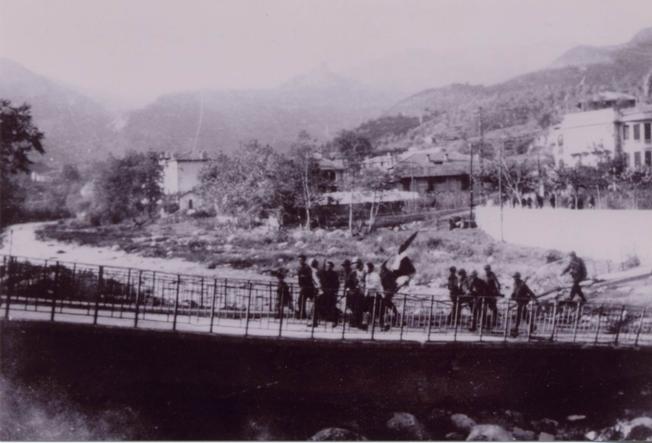
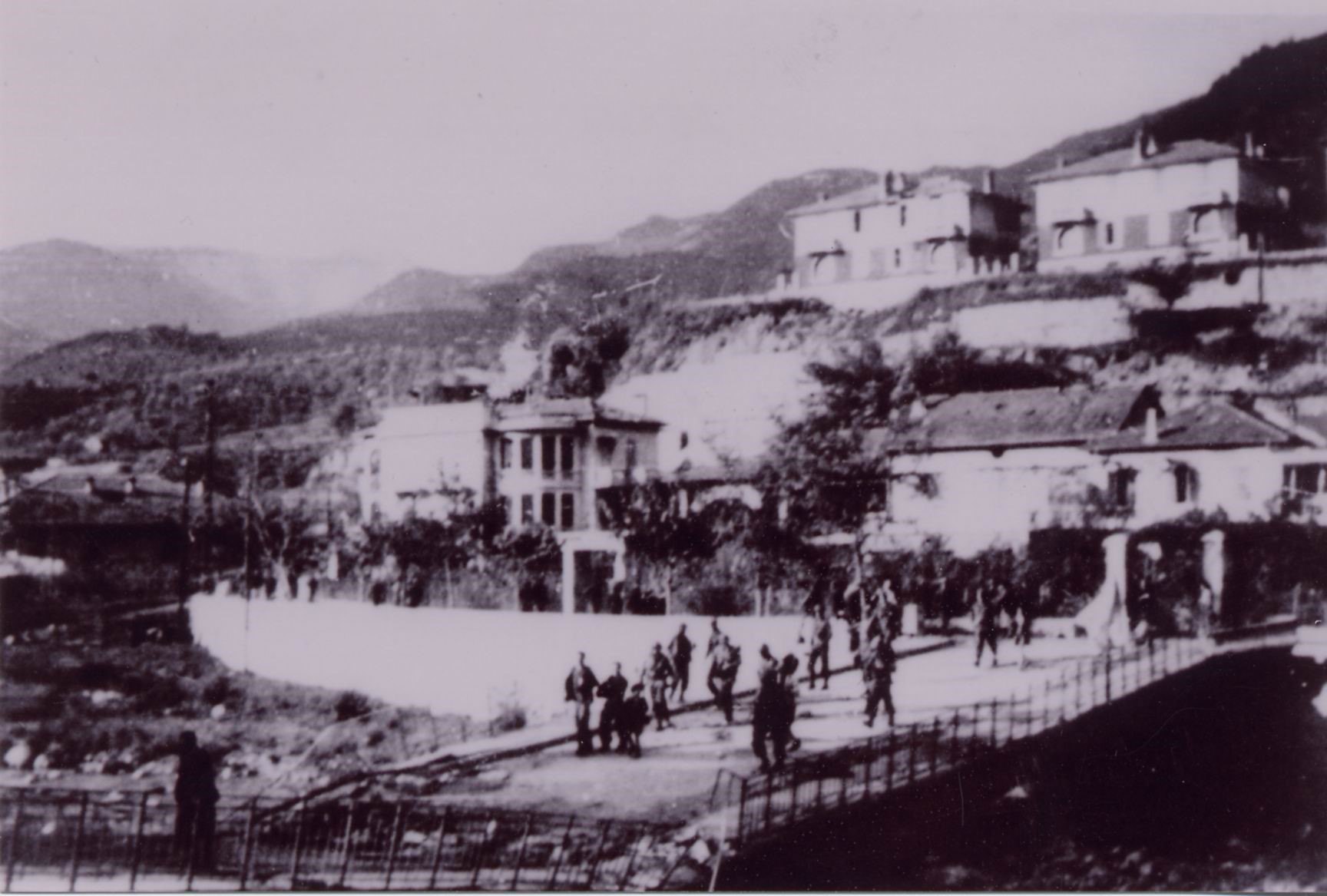
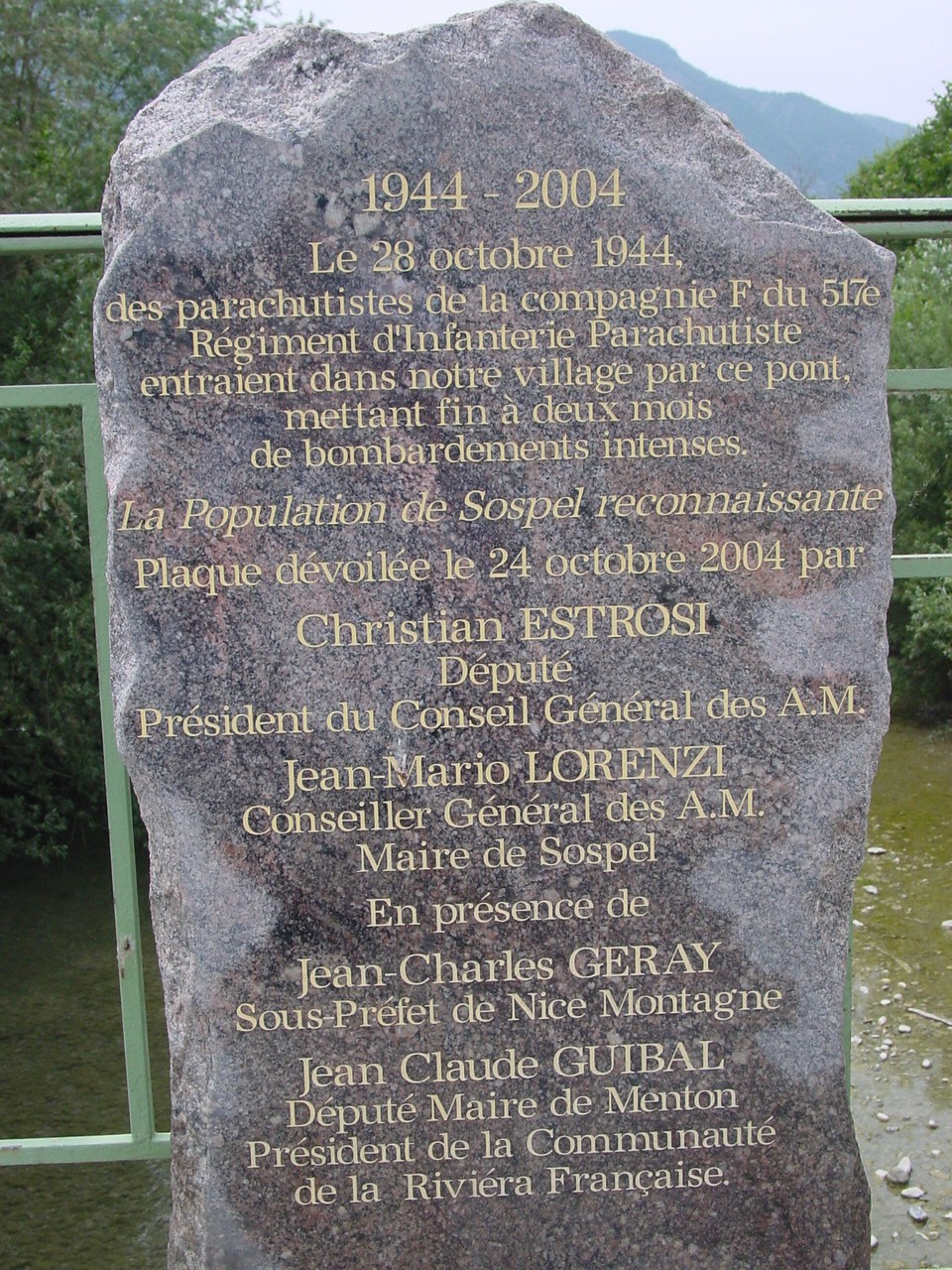
Mr. Coleman Well the little town, there was several little towns there, but the one that my company or some of the guys with me were to get was Le Muy. And we finally got to that, but it was, I think, the following day. We really didn’t know where we were; even though I had a bunch of maps and all that there was nothing to distinguish where we were. Once we got to Le Muy we were O.K. We took that town and a friend of mine from my company went into that town. The Frenchman, they were fighting underground – the underground Frenchmen, you know – told him they were going to give him an honor and let him shoot, execute, one of the turncoats. One of the Frenchmen that was sympathetic to the Germans and helped them during the war and they had him up in a closet upstairs. And so my friend went up there and shot him dead. And he came back and he told me about it. And I said, what? He said, “I did it.” I said, “You did it.” And he said, “Yeah, I did it.” He said it was quite an honor. I said, hell, I hope you can live with that. But I don’t get it, so anyway that came back to live with him a little while later. A very interesting story. But anyway, we captured that town and from then on we fought as an outfit, walking across France so that we would be the eastern flank of the entire allied army. British, Polish, American and everything. We would fight our way to the Italian border and the Swiss border in the Alps and we would cut any Germans that remained in Italy out of there. We would stop anything from coming to the coast or going to Italy, or doing anything over there. We were by ourselves attached to the First Allied Airborne Army. General Fredericks. I never met him. I often wondered if there was a guy like that. Anyway, that’s what we did and we did it for 94 days, freezing to death. As funny as it may sound freezing in August, September and October, but we were in the Alps. And that’s where I got frostbite original deal with that. We fought across there through all these little towns, Luceram, Peira Cava, Col de Braus, all the way over to Sospell.
Sospell was the most easterly town I guess you’d say before you dropped off into Italy or went on up into Switzerland and above Monaco; and the closest big town to us once we got over there, faraway over there. The last 30 or 40 days of those 94 days was more or less static. We would feel them out and fight a little bit. But we were mostly in a holding position for a long time. So we had a chance to get 2 or 3 guys a leave. You would go down to Nice or Monaco on the Riviera and spend a couple of days and come back up
Mr. Cox Start shooting again?
Mr. Coleman And start shooting again, you know, and that kind of deal. And I got my feet all messed up.
Mr. Cox Tell me about that. How did that happen?
Mr. Coleman It’s hard to understand how little an airborne outfit has in the way of supplies. You have no vehicles. You have no cooks, so to speak. You don’t have any hot food. You don’t have clothes; you don’t have a quartermaster there issuing you new clothes, new socks. So we stayed in our old socks for weeks. And we’d get them wet and grinding in that dirt, make your feet all raw, and then they’d get cold and get infected and do a lot of funny things that I call, kind of, frostbite. I don’t know what all it was - infected and swollen and blue and cold and just uncomfortable. But we didn’t have anything. Everything we had, we stole. I know we stole a Mercedes from the Germans. And the damn thing ran on wood. We put a little kindling in there and burn this stuff somehow or another, we ran this Mercedes. We had that. It’s on our website.
Mr. Cox I’ve seen it.
Mr. Coleman Yeah. We had that and of course that was one vehicle, but everything we had, we had some horses, rode horseback. We had some old beat up French cars. Actually my experience was the French were very cooperative and very understanding of us. And I had more than one offer to go on patrols with patrols that I would send out. And one was ten years old. A ten-year-old boy stuck by my side for I would say, six weeks. Thick or thin. I’d say, “Where in the hell do you live? Where’s your mother, where’s your daddy?” “I’m with you.” He called me an Italiano. Why I don’t know. Anyway that’s what he called me, and he was with me for six weeks, I guess.
Mr. Cox Do you remember his name?
Mr. Coleman I have no idea. I’m sure I had a name for him. It wasn’t his name. But he’s a great little kid because he really knew that part of the country. He’d say, “Oh, you don’t want to go around here, that waters too deep.” Or, “You have to cross that river and there’s no bridge,” or whatever. And he’d save you some extra effort that’s just a waste of time. We’d have women help us on patrols. Some of them would come up there carrying a gun. And they’d be ready to go right with you. I mean, put them up front. My experience with the French was fantastic. And the reason I say that is because we’ve criticized them so since then and rightly so in some areas, particularly civilian to civilian over there. And, particularly since we’ve gotten into this thing with Iraq, we’ve criticized them a lot. I had a letter from the French Consulate apologizing for the differences in our political views. And I wrote him back and I said don’t be so sure that our views are different when you write me because there’s a lot that I don’t understand that I have never criticized you for your views. And then I explained further about my experiences with them over there. He sent me a nice commendation along with the Croix de Guerre, which was nice. But anyway, I have nothing but good things to say about the French in wartime. And the Belgians, particularly those guys. They still communicate with us like crazy and take care of some of the cemeteries. They helped us a lot and I think I got to see that more than a lot of the guys simply because of my job. To know where we were, to know what we needed to scout out. My company commander would tell me we need a patrol to find out what’s down there at the foot of that mountain, three miles down there, whatever. And I’d figure out how to get there, and who to send and how much we needed and whether it would be a combat patrol or just a reconnaissance patrol. So I kind of kept up on that stuff real well and knew a lot of those little details that the average guy never knew and wouldn’t need to know. So I got to see those native people over there under some conditions that maybe a lot of our guys didn’t. Or maybe, people today don’t see. But everywhere we went past the farmhouse they’d fill your canteen with wine, give you a loaf of bread and tell you how to get where you were going. When we went into town, they were nice to us in there. I remember, Lissner, my company commander, when we were up kind of static, he and I slept in the same dugout. We dug a big hole about that deep and covered it with pine logs.
Mr. Cox About four foot deep then?
Mr. Coleman And then we just slept in there, the executive officer, the company commander, and me. And that’s where we were. We had guards out around us and everything. Because we were still sending out patrols but we’d stopped the actual movement of troops forward at that point. We were holding what we had and kind of feeling them out from time to time. So anyway, Lissner says let’s go into town tonight. That sounded great to me. He said well, “You’re going to need to put this on.” So he handed me some bars, lieutenant’s bars and had me put on the lieutenant’s bars; and gave me one of his old dress caps and another pair of lieutenant’s bars, I guess he borrowed from some guy. So Murray Jones, who was our executive officer, Lissner, and me went into town. We were going to the Officer’s Club. I thought, God Almighty, I’m going to walk in there and there’s going to be the battalion commander, or some of the old guys we know and they’re going to see me and I’ll be court marshaled and all that stuff. It didn’t make much difference because I went. That’s the night that Lissner had that fight with these three guys. And he knew it was coming. Murray Jones and I were walking along and Lissner, the three of us, and we stopped on the sidewalk and we were going to cross the street. And Lissner was on the outside coming down the street this way were these three guys and three girls. Lissner turned to us and he said, “Listen to this and pay attention to it. You guys don’t do anything. I will court marshal you if you do anything.” What the hell’s the matter with this guy. What’s he talking about? And he said, “Just stay out of it.” You bet! I didn’t know what he was talking about. Murray didn’t know what he was talking about. These three guys came down, and for some reason Lissner knew one of them would say something to the Airborne. We always were usually with the armored divisions. One of them made some little crack. And with that Lissner stepped out there and blocked their way. And then it started.
Mr. Cox Now, he had his officer brass on. And the guys he took on were they enlisted or officers?
Mr. Coleman They were officers. Oh yeah. He would have never have done that unless they really got into it with him. And then he would have. Or he would have sent me to do it then. But he stood there, before I could figure out what was going on, he had those guys on their backs. I mean, there was no fight to it. Just a couple of punches a piece, so fast and so hard. This guy, this little guy, had them out. I mean down and out. And when we left they were still down there. They were there. And we go on and he just said, that’s good, let’s go. And where we going? We’re going to the Officer’s Club. And we stopped. We just come in town from some lights, couldn’t see real well, and we walked over to this table and sat down. Finally you could see. You could see there was a guy sitting right here. I looked at the guy and said how you doing. And I looked at him again and it was my old company commander. He had been a company commander before Lissner, but had been booted up for some bad reason really. He kind of screwed up somehow.
Mr. Cox What was his name?
Mr. Coleman His name was John McKinley. He was from Georgia - six feet three, and he was an ex quarterback at Georgia Tech. And one of the most handsome men you ever saw. A perfect physical specimen. But he did some really, I kind of hate to have that on there, but he must have done something that caused him to be promoted He was sitting there, and I said, “Hi Captain McKinley.” And he said, “Well, hello there Lieutenant Coleman.” And we just let it go at that. And that’s the way it went the rest of the evening. With no explanations to anybody. But, of course, when we got back it all became Sergeant and Captain again, you know, back at the hut, a little underground deal. But then from there John Lissner, John Caver and I went on a patrol one day, and this is kind of important. Lissner rarely went on a patrol because your company commander rarely did that. But he said let’s go down there and check that area out. There was an area we’d been watching, and let’s two or three of us go. I said O, K. Get somebody to go with us. So I went around to this other guy, John Caver, who was from Port Arthur, Texas. And I said, John, you want to go on a walk? And he said, yeah, I guess so.
Mr. Cox You call it a walk, huh?
Mr. Coleman Yeah, so we went and we got down about a mile from camp going down this hill and they opened up on us with artillery. And I said they opened up on us. They must have had that area zeroed in perfectly because the first shell knocked me down and out – unconscious, colder than a mackerel. It knocked John Lissner down the hill. It hit John Caver in the head. Went through his helmet, shrapnel, and into his head. And the next thing I know I’m lying on the ground and Lissner is saying roll down the hill, roll down the hill. And they’re still shooting, but not hitting us. Their first shot was their best shot. And I got up to roll down, he said roll. And I rolled and I realized that my pants were out of my boots, my shirt tale was out of my pants, and my helmet was gone. The shell had hit so close behind me that the blast just went over me and, and just blew everything out of my pants, you know. I wasn’t scratched. Except that I’m wearing hearing aids now, you’ll notice, a concussion and ear damage and stuff. Caver got hit in the head. We sent him back. Actually, we took him back, of course. But we sent him back to the hospital and he never reported back. I don’t know what ever happened to him.
Mr. Cox So you don’t know if he survived or not?
Mr. Coleman I don’t know that he did. I tried to find him a couple of times even when I was in Port Arthur since the war, and I’ve never found anybody who even knows who he was. And after a while you don’t want to find out. I found out too much onetime and it just… So I look a little bit and then I leave it. I don’t know if that makes any sense. Anyway, Lissner didn’t get scratched. Then we moved from there. We captured Sospel. And it was there that we had our first really close up contact with the Germans. At least I did in taking that town. And they were pretty heavily stacked up in there. But when we finally took it, I remember, I climbed up on top of a hotel. I don’t remember how I got there, on top of this hotel with two or three guys and I’m looking down on a square of this little town, village, Sospel. And these German soldiers were running across the square with a woman on each arm thinking that we wouldn’t shoot at them. Because we might hit the women. Why hells bells, I was a good enough shot to shoot the soldier and miss the girl. But a lot of our guys, they didn’t shoot at any women, but they shot at the guys. That didn’t slow anything down. And that was our last bit of hard combat there in that town. Then they pulled us back to a little town out of Nice. They said we’re going to put you in a rest area. Then you’re going to go to the north of France and jump across into Germany. O.K., let’s get the hell out of here. Anything’s better than this. In the meantime we’d run into some guys in the mountains. To show you how strange the army is and the war, we thought we were the only guys where we were. One day I ran into some guys that were in the SS wars or something, Strategic Officers Service or something. And they were sitting up there on these little white parkas for the ski troops, you know. I remember I swapped him my jacket for his, this other guy, for his ski parka. Met him up on the hill, never saw him again. Met some Japanese guys up there that were in the 442nd, which was a famous Japanese-American group. Got more medals than anybody. Fought like crazy, from Hawaii. Ran into some of those guys and they were carrying these purple Indian knives. And they talk about how they sleep in the day and hunt at night. It was like a dream. I don’t know where those guys came from or where they went. I never saw any more of them. But we did move. They were going to move us from Sospel, 52 miles. I remember that. To this little town between Nice and Marseilles, to rest. And so, you think, they’re going to get us out of here. There’s a bunch of trucks up there and they’re going down. They’ll be here in an hour. We had to walk. 52 miles across the damn Alps. I couldn’t believe that we went down to get there. And they were doing us this favor. We got down there and we pitched those tents again. We just played football and basketball and did practically what we wanted to and we spent Thanksgiving down there. We had a celebration. Some how or other, I got involved with the bread making end of the deal and had to go find a baker that could make enough bread for a regiment. And I spent three days working at his house in his bakery helping him make bread. Unbelievable. And then we had this party, and everybody got stoned; drunk at hell. And it was down in this big, big room. And I’m sitting there where I can see Lissner. He’s sitting over there with all the officers. And he’s looking at me and I’m looking at him and we’re kind of nodding like that, you know, and laughing. All of a sudden a guy says Yippee and he’s raising hell and he throws a plate. Everybody starts throwing their plates. First thing you know, it was dangerous in there, dishes going everywhere. And I look at Lissner and he looks at me and he grabs his plate and he does that. And I go like this to him. That really got him when I showed my disapproval of that. I didn’t know it at the time, but when we got back to camp that night, we were all half loaded, and got in our little tents down on the soccer field, that’s where we had them. Of course, he was camped up in the house somewhere up the hill. I was lying in there with my buddy, asleep. Somebody tapped me on the foot. “That you?” And I said, “Yeah.” “ Who’s in there with you?” I said, “Bob Reed.” He said, “Bob, get the hell out of there.” Kind of mad. So Robert Reed woke up and said, “What’s the matter.” I said, “Get-going man.” So he left. And in comes Lissner. He said, “What was that stuff down there at the thing?” I said, “I don’t know.” I was just loaded enough to answer what he asked me. I said, “I don’t know about you, but I wasn’t raised like that.” I said that didn’t prove a damn thing to me. And he said, “Well, I came down here to apologize.” And he made a big deal out of it. And it embarrassed me as a matter of fact because actually I did some pretty funny things in the service that I haven’t told you about here that I may get to yet. But anyway, the next day he came down – he left- and the next day he came down. He said, “Is Reed around?” I said, “No,” and he said, “Well, I don’t want anybody around.” I said, “O.K.” So he said, “How do you feel about how this things going?” I said, “O.K. I’m sure glad we’re down here.” And he says, “What do you think about having a commission?” And he said, “Do you think you can handle a commission?” And I said, “I’ve thought of it a long time. I felt that way a long time.” Kidding back with him. Hell, I thought I always belonged as a commissioned officer. But he said, “I’m not kidding you.” I said, “You’re bound to be kidding me.” He said, “No, I’m not kidding you” And I said well, “If you want the answer to that question, I can do it.” And he said, “I think you can too. Let’s go see Colonel Seitz.” Major Seitz was now a colonel. So we went up and we talked to Colonel Seitz who is now a three star General in Kansas today. Anyway, we went up and we talked to him. And I didn’t really pay enough attention to really relate exactly how the thing went. Except that when I left that house, it was just a question of getting where we were going from there up to the town we were moved to, off of the Riviera to our next area. And then I would be made an officer. I just took it for granted. I remember thanking them and saying they would never regret it or some such line from the movie, I guess. Anyway, then, from there, well we ate our Thanksgiving Dinner there.
Mr. Cox In 1944?
Mr. Coleman Yeah. From there we got on boxcars, not a train, not a passenger car. We got on those damn things and went from there to Soissons, France which is across France up north of Paris and up toward Germany and Belgium. The little town of Soissons. And there we got off and camped in an old, I believe it was a military barracks, I mean old, brick, rot, one of those things you do make a movie about. Really old and really classic and brick parade grounds, you know, lopsided, everything old, old. We got in there and they said all right boys you’re on a class D priority which means no ammunition, no clothes, no nothing because you’re not going to have to do anything but sit here and wait until we go jump across into Germany. O.K. Well, that isn’t exactly what happened. We were there about two days and here they come again with these damn trucks and say the Germans have broken through in the Ardennes and they’re heading this way and some of them are even south of here. He said they’re already beyond us. How’d that happen? You know, paratroopers. And anyway, they put us in these trucks and up we go. In the meantime, winter has really set in and my feet are shot. As well as, see I was going to take care of this hearing. I was hearing these ringing deals. And this particular ear was real sore inside and all, but it’s not something that we were in a position to pay any attention to down where we were before because I can still maneuver. I mean, I didn’t think anything about it. But apparently about two or three days after we got up in that terrible fight…
Mr. Cox Was that the Battle of the Bulge?
Mr. Coleman That was the beginning of the Battle of the Bulge. They sent me back to the hospital to get my feet treated. They were so bad you wouldn’t want to look at them. And when all that - to make a long story short - when that happened, I never got back to the outfit. They sent me back to (?????), France. I was there and somehow or other developed pneumonia, or had it and didn’t know it. I remember being kind of delirious when they told me we were going to move to another hospital and I kept telling them that I’m moving from here to my outfit. I remember having a big issue with some orderlies about that. As a matter of fact it was one of those things where they were holding me, holding me, telling me I wasn’t going anywhere. I was just delirious. I wasn’t making any sense, I’m sure. But anyway, it got so bad up there that they needed hospital beds. So they would move the guys in the beds they had to another hospital. And they kept doing that to us and I ended up in La Mon, France. And I didn’t know where my outfit was by that time. By that time you know they were gone anyway. So the next thing I knew a guy from E Company was in the hospital with me. And I said, “Where in the hell are they?” He says, “I don’t know but when I left it was snowing like hell.” And I said, “Well, me too.” And the bullets going here and there and the enemy on all sides of us and all that. “Yeah”, he said, “That’s right.” He said, “I don’t know where they are now.” We lost a lot of guys, and he named a little town, Malmedy, where there was really a massacre. I was under the impression that it was our particular outfit. But he didn’t have that quite right. Anyway, it was bad. And we all got shot up so bad up there that our regiment – they would take parts of our regiment – and put them with the 7th Calvary or put them with the 101st Airborne. Part of our guys guarded the General of the 101st at Bastogne. Part of our guys went into the 82nd on a temporary basis because nobody had enough to make an outfit, and they needed people where they needed them. Where they used our company, our battalion, and our regiment to take certain areas as a regimental unit. And it just so happens, and it will never be known no matter what history does, it will never be known that probably the 517th stood up under the major, the absolute worst couple of days of battle in the whole Bulge. That will never be known. Everybody thinks he was in the toughest battle anyway. But it just so happens, if you check the casualties and you do a lot of checking, and let some of history take care of it, you find out from talking to the natives as well as guys in other places exactly how bad it was. And to this day, as I mentioned it before, we had Belgium people that maintained cemeteries and they’ve spent summers here with some of our guys. Our guys have spent summers with them. That they knew. They’re very loyal. They’re building a museum over there now to us. They did in other towns. We were highly decorated. We got the Croix de Guerre from Belgium. We got some sort of citation from Yugoslavia. Our particular battalion got a presidential citation. We got, you know, you can keep going on and on about that stuff. But no matter what you got there’s a million guys out there that deserve it that didn’t get it, cause nobody saw it or told about it, or even knew about it. I mean you’re going to know you had it coming.
Mr. Cox Did you get your commission?
Mr. Coleman I never did get that. I never did get that, never heard any more about it. And to be frank with you I never really cared once I knew I was out of it. When I got to LeMon, France, I was there Christmas day. I remember that because it was Christmas day. And I remember this doctor coming in and saying we’re going to need these beds. And I said; get me back to my outfit. He said you’re not going anywhere. You’re going where I tell you. Then I knew I was out. And the same thing happened with this boy he was in E Company. He was there with me. He was, I forget now what was the matter with him, he was wounded somehow, but I don’t know what it was. He was, I believe, from Oklahoma. And we kind of struck up that common ground deal of both being from the same general area and all. And, of course, we were from the same outfit, so we stuck together. I don’t know what happened to him either after we left there. We went from Le Mon to the coast of France, and there back to England. When we got to England, I got kind of panicky. I felt like I was away from the war. Until then I kind of felt like, O.K., it’s just a matter of time and I’ll be, you know, going up the road and there they’ll be. But when I got to England, I kind of got the funny feeling that that was it.
Mr. Cox Kind of like leaving your family, wasn’t it?
Mr. Coleman Yeah, it was a horrible situation. I remember going through different wards in that hospital looking for guys with boots on that I could ask where everybody was. And I had ideas of getting there somehow. I don’t know how I was going to get across that Channel. But I remember this Captain who was a doctor…
Mr. Cox Talking about your conversation with the guy.
Mr. Coleman Anyway, I just told him, I said let me just say it another way. I want to get out of here. I wanted to be out of here a long time. I want to go back to my unit. I belong with my unit. I was trained by that unit. That’s what I do. That’s what I do is that stuff. And he said, well, you wouldn’t feel comfortable maybe having a little easier time driving a jeep for somebody? God! That was insulting. And I said no I wouldn’t. So he said O.K. we’ll go on back. And I went back to the ward and it wasn’t, I don’t know how many days later, they called me up before a committee of all Colonels. And I’ll never forget that guy. I thought, boy, I don’t know what they’re going to do to me but at least I’m going somewhere. And I walked in there and they said How you doing, Sergeant. And I said I’m doing fine and I’m ready to go back. I don’t even know where they are, but I want to go back. And so I started to explain to them where I thought they were. And they said don’t you worry about that part because you’re not going over there. You’re going home. We need the bed. Your feet will never be anything but trouble to you, and your ears, and your going home. And I went home. And I went back to, right back to Patrick Henry. Got there by boat, left from Liverpool – actually from England I went to Wales to another hospital, and then went to Liverpool. Got on a boat and went back to Hampton Roads, Virginia. Got there and that night had oyster stew and saw a movie called National Velvet. And then the next day we was on a train going I didn’t even know where and wound up in a El Paso at the hospital there, Ft. Bliss. And I talked to the officers over there and they said the war is over or just about over. It really was over, I think, or close to it. And I said in the Pacific too? And they said no. I said well, you know, I think maybe I could go there. I don’t know I must have been crazy. Because anyway, they said, you’re not going. Said that’s it. So anyway to make a long story short, that’s where I got out. And when I got out I was so glad to get out and so miserable about the way it happened. The fact that I wasn’t with my outfit. You have no idea how that feeling, or maybe you do, but I’d understand if you didn’t. Anyway, I got out and when I got out they said O.K. we’re going to give you this discharge and on the back you can put whatever you want on there for people to see. I just kind of faked it. I was in France and maybe said Belgium, I don’t know. Just a few little things. And I didn’t say anything about combat at all. I just didn’t care. And I didn’t think anybody else would. So I got out and discharged.
Mr. Cox Do you remember the date?
Mr. Coleman Yeah, June 22, 1945. And got back home to Corpus Christi. About two weeks later I got a Purple Heart medal, and a commendation and all that stuff from some General at Ft. Sam. I don’t know where anything went except, for some reason, I still have that medal. I didn’t know - people would ask me what campaigns – I couldn’t tell them the name. I didn’t know anything. Until I found out about our organization, I didn’t know we had one. And once I found that out about five years ago, and have gotten in contact with these guys, I began to realize I owe this to my grandkids and my kids as well as myself to know what the hell I did and where I did it and have a little history of it, you know. So I started in and the more I got into it, the worse it was. Nobody had a record of anything. And that’s when my deal with the congressman and some guy out of Ft. Sam started and I had to fight like hell and contact every government agency to see if they had a record of anything that I did there in their deal. And I slowly began to hear from foreign countries on little citations or what have you before I could get anything out of this outfit, my own. But finally that came about last fall. And they got it right except for one thing. When I left, I was in the 517th Parachute Regimental Combat Team. And I wasn’t in any other outfit. But as the war went on after I had left, in the closing weeks of the war, we were sent into – part of our guys were in the 82nd, part of them were over in some cavalry division or something – when they got out, when we got to Germany and the war was over they gave our guys this option. You can either go into the Pacific or you can go into the 82nd Airborne Division and stay in Germany. And some did and some did the other and some didn’t want to do either one. So somehow or rather before we were disbanded, and we were at Ft. Bragg later that year, the 517th was disbanded formally. Somewhere in there we were in the 13th Airborne Division. How that happened and who they are I don’t know. And I argued with the Congressman and everybody else about it in Washington, and they said yes, you were. And they said it was a temporary thing. Your outfit went out of the 13th Airborne Division when you were discharged. And I said, I didn’t, and they said, well, you did. And I didn’t. On these citations, so and so and so and so in the 517th Regimental Combat Team 13th Airborne Division. They sent me those all framed. A general handed it to me. And I’m reading it, and, oh God, I’ve got to get that corrected. Well, as soon as we left Ft. Sam, I went back to the Congressman and told him, this was not right. And we sent it back in and they refused to change it. The only records they have show that our guys went through the 13th somehow. And they don’t have anything to show any different. So to this day I’m still working on that, but I have a couple of little things hanging on the wall that say I was in the 517th, but I was in the 13th Airborne Division. And I don’t know who those damn guys were, but they damn sure weren’t us.
Mr. Cox Just paper huh?
Mr. Coleman But anyway, John Lissner, he was wounded terribly and kept getting promoted and he was wounded pretty bad in the Bulge. We were probably in the same hospital in England and didn’t know it. Anyway, when he got out of the service, he secured a job as a coach and military advisor, head military man, for Cardinal Farley Military Academy in Westchester, New York. Which is a pretty up class deal, you know. I didn’t know where he was and I tried to find Lissner in Brooklyn. Well, that’s like, you know, but he found me. Somehow or rather, he found me. And I at that time I was back over in Tennessee in law school. And we started communicating, and he said I’m a coach and here’s my record for the year. And he showed me a picture of him with his whistle and 14 and 7 or whatever it was, and said not bad. Showed him teaching guys how to box, which he could damn sure do. And he proved that to me in Rome. I didn’t tell you about that. He damn near broke my jaw. Anyway, he was head of the military there and head of the Athletic Department. But apparently after he and I quit communicating, actually it happened when I got out of school, I guess. He went back in the service, apparently, because he later became a colonel, and I think in the 13th Airborne Division. But he retired out of the army and moved to Florida. And then I got a hold of him again when he was down there. He was an old man. He was nine years older than I am. I’m 81. I remember saying Sir, “How old are you?” And he said, “What did you ask me?” And I said, “I just thought you might tell me how old you were.” He said, “I’m 27 years old – 29 years old- and I’m a virgin.” And I said, “Are you kidding?” And he said, “Let me tell you. I was studying to be a priest and I am a virgin, 29 years old.” I said, “Well, good for you.” What am I going to say? Anyway, as time went on, he did go back in the service and he did retire a full colonel there. And he was awarded a bunch of medals from every damn place. He was a tremendous leader. He was a perfect model for a paratrooper. He was an angel that was an outlaw. I mean he was a perfect, perfect combination. He would sing for the regiment when we marched. You could hear him all up and down Georgia singing so that we would march to his beat. He was really a special person. And I’m sure, I’ve never told anybody this with the possible exception of his daughter, he may be the reason I’m alive. Because as I look back, I remember, he didn’t write anybody’s family. But he did write mine - all the time. I think there were probably some times, I hesitate to say this, but I have to honestly say it. There might have been some times as I look back, that I was unaware of at the time, where I was in a place where I was a little safer than I might have been had I been in another place. And I was in that place because he sent me there. I also got into some places where I – it’s a wonder that I’m here simply because he did send me there. So I’m going to question that a little bit. Yeah, he and General Seitz sent me one night in a jeep. They got a hold of a jeep. Sent me up to a town that we had not occupied yet to check it out. Myself. And they said when you get there though; don’t worry, because we will already have an outfit there. And I said, “What outfit?” And Lissner said, “It’ll be me.” And so we go, with this driver. I never knew who he was. We drove about 40 miles through the Alps weaving in and around, like that, and climbed, climbed, climbed, freezing to death, not knowing where we were going except the town’s name. And they were to be just on the other side of town in the bend in the road. I wondered how we were going to find it. I left this little French town with Seitz standing there talking to this French lady and Lissner getting everybody together and I thought boy, I’m going to be on an important mission. But they’re going to at least be there and take care of me; I won’t get shot and all. I go into that town, and everybody was surprised. A few little native people saw the jeep come in bowing and scraping and raising hell, you know. And treating me like a hero just took over their town. I was the first guy that got into the town. And I drove on through it. We don’t have time for these celebrations, and we drove on through. And I thought how comfortable this is. We got out of town and we came to that bend, it was obvious which one it was because it doubled back on us about three miles out of town. And I told the jeep driver, I said stop the jeep. He stopped the jeep. And I told him turn it around and face the other way and stay here and don’t leave – don’t leave. I’ll be back. So I left him pointed the other way and I got out and started walking up that road. And it was so damn dark and cold and quiet. And I thought, what, who’s where? Why isn’t there some security on this road or something. So man, I’m walking along and I’m shooting the password out and climbing up on the hill in the dark calling out Lissner’s name. Not the password, but Lissner are you up there? I did that for 20 minutes and then I got scared. Then I realized I’m the only guy on this hill. And I went back down to the jeep and I told the guy start this engine and let’s leave. And we did. And we went back down in town and there was Lissner in town. I was clear beyond everything and the damn Germans. We lost a bunch of guys the very next day right at the bend in the road. I was amongst them (Germans), but it was so damn late at night, I guess they didn’t know it. I was not making much noise except whispering Lissner, Lissner as I walked along.
Mr. Cox And the Germans were all over the place, huh?
Mr. Coleman All over the place. Then when I got back there he was there, and I found him. And he said, where have you been and I told him I’d been up there. He said that’s where the other guys are. Yeah and you sent me. That’s all right you got back.
Mr. Cox The other guys being the Germans, right?
Mr. Coleman Yeah, the other guys being the Germans, yeah.
Mr. Cox There’s a couple of things I’d like to get how you’d felt. One of them, where were you when Franklin Delano Roosevelt died and how’d you feel?
Mr. Coleman You know, I don’t know where I was.
Mr. Cox Do you remember getting the news?
Mr. Coleman Yeah, I do. I was never, I guess I was too young or too uninformed, however you want to put it, to be as serious about the political situation as kids that age are today. I know how I thought about the different leaders of the different countries in a comparative way, but I don’t know that I was moved much one-way or the other.
Mr. Cox You didn’t have any special feelings?
Mr. Coleman The funny thing was at the time in the environment that I lived in, when Truman was in office, nobody where I came from cared for Truman at all. And I said this a couple times since then, since we’ve gone through that part of 50 years; he may be the best president we’ve had in my lifetime. And that’s the way I really feel. And at the time I would never have thought of voting for him because you just didn’t vote for him. He was a machine man, a little haberdasher from wherever he’s from.
Mr. Cox Independence, Missouri
Mr. Coleman But as I look at him now, man, we just keep going downhill. And there all guys I voted for that’s the funny thing.
Mr. Cox Let me ask you this also, when you’re especially in combat, did you get mail often? And what was your feeling about mail at the time?
Mr. Coleman Oh you looked forward to mail. If you had gotten a bill, you’d look forward to it. Anything. Just to hear from somebody. Yeah, you looked forward to that like crazy. And I never could share mail with anybody like I noticed a lot of guys would do and read excerpts from the letter that their girl wrote. That was always a very private kind of thing to me and I never did understand that. Actually I guess, I still don’t. But I sure didn’t then. But I loved getting mail. We got mail as often as we got anything. There were times I’d rather have a pair of socks. And I’m serious. Socks don’t sound like much. But when you’re walking and climbing, and walking and sweating, and getting rained on and cold, and you take your shoes off, and you don’t have but half a sock in that dirt and grinding at your feet, you’re not comfortable, ever. Clean socks, and you can feel like you had just taken a bath. But mail was a big deal, a really big deal. I never was too big on weekend passes, I mean; I never did have those plans. I had a good time when I went. In particularly, overseas, when we’d get down to Nice, which was just a terrific little town in the southern part of France. And they lived a pretty normal life down there and it was great. They treated you like you were kind of halfway important. And I guess you were because they were glad to see those guys out of there. Every little town we took was a tremendous boost to have those people come out there and show you that, because it was sincere. Of course, there was some phony stuff about it. But there were a lot of people there that lived in terrible conditions. And they saw us as a way out. And we were, ultimately.
Mr. Cox Twice.
Mr. Coleman They couldn’t have been better, every little town was unbelievable. Italy was the same way, really. God Almighty, the Italians you know, they were kind of out of it when it came to being soldiers. I mean they weren’t much. But when you cross one of those orchards or vineyards or something going from one to another looking for something to shoot, those guys would run out there with a cart pulling a 55-gallon glass thing of wine. 50 gallons of wine on a two-wheeled cart running out through a thing waving their hats so they could give you some wine. The friendliest damn people in the world I just never saw anything like those people. But they were all that way. When we’d go on a pass, I don’t know how we’d meet them, but we’d meet some guy and he’d say my parents are in Paris or whatever; why don’t you stay at our house tonight? The next thing you know you’re in some elaborate damn chateau of some kind. I mean unbelievable places. And they’d just turn it over to you. Every time we went in, my being with the company commander we had the best of everything. If it had four walls and a roof well we had it and they’d get out, the people who were there. Man they’d bow and scrape and cut out of there and give it to you gladly. People are pretty much people when it gets down to it. And they all relate to one another after a certain point is reached. After that horrible point is reached. They all relate to one another and trying to make it through the night.
Mr. Cox Changing the subject. You mentioned the Battle of the Bulge, and you mentioned the ground being so hard you couldn’t dig in it. Can you kind of describe how it was when you were in the battle and you had to dig in?
Mr. Coleman I’ll qualify it this way, and I’m pretty sure I’m right. 99% sure I’m right when I make this statement. That winter in that part of Europe in the Ardennes Forest was the coldest winter in history. The ground was as hard as this. To dig in it would have been a big job. You couldn’t run up and dig your platoon in over there on the face of that hill. So that’s a joke. You couldn’t do it. You just couldn’t do it unless you had weeks to set up a camp, and you didn’t because you’re out there fighting. You may not be there for an hour. And so it was very difficult to do that. Fighting conditions there was so different from so many of the other places in that the forest was full of big trees. You would think you were kind of protected in there, you know. Tanks can’t get through there as well and guys with rifles can’t shoot around through those trees. But the truth of the matter is that artillery shells, when they land in those trees are just like an air burst. And instead of being on the ground where everything explodes and goes up, it explodes up in the air and comes down and gets everything on the ground. You can’t get in your hole and hide from an air burst, from a tree burst. You can get down here where the shrapnel flies over you like it did when I was knocked down. It went up in the air over me, and down on the side of the hill. I was on the side of the hill, and it just blew out there and didn’t hit me, even though it did hit John Caver. But it didn’t hit me. We were always afraid it would hit in a tree. When we first get into combat the first thing they do in the barrage is start running and getting under a big tree. And that was the one thing you could tell it was a new guy. The old guys are getting out there away from anything that shells would break on above him. So that was the worst thing, the weather and artillery. And of course, the fact that the Germans made an effort, that there may have been a time, if they’d known how well off they were, we’d still be there fighting. But that time didn’t happen simply because of the confusion. They had guys behind our lines. We had guys behind their lines. They had people fighting that weren’t really soldiers. There were some children in tanks. When I say children, I mean fourteen-year-old guys in tanks. Women up there - fanatical women. Some of the soldiers weren’t in the greatest shape either. However, in the Battle of the Bulge, they did kick in the best troops they had left. We fought against a lot of German paratroopers up in Belgium. They brought them down through Belgium and some of our outfit fought some of their famous, regiment or division of theirs. And they had the best of their guys. It is very confusing. You’re behind the enemy lines so you have that going for you as well as against you. In other words you’re cut off from your own troops because you’re behind their lines. They don’t know how many you are or where the hell you came from, and how much trouble were we in with those guys back there. Because they don’t know how many you are, and they don’t know where you are. So you got an element of surprise, but at the same time you’ve got the knowledge that if it gets down to it, you’re surrounded already. You bought into a General Custer deal right off the top. And the guys said in that movie, Band of Brothers, explaining to some guy he said we’re paratroopers, we’re suppose to be surrounded. Incidentally, that movie, I’m sure you’ve seen it, is probably the most accurate depiction that you could possibly make of that particular situation with that particular company at that particular time. There’s nothing you could do without showing blood and guts, I mean, without doing things you can’t do. But I mean they weren’t all heroes and they weren’t all congressional medal of honor winners, and they weren’t all perfect and all that stuff; but boy just get in their way. It was really well, well done as opposed to so many of the others. My best friend in law school was in that particular company, Easy Company, or the 506th and they mentioned his name in that movie. Somebody said, I heard Gordon got it pretty bad. Well, that was my friend. He was a machine gunner from Mississippi. And he was shot all to hell.
Anyway, we met each other, Gordon and I, in law school. First day of law school we each had a little pair of miniature parachute wings on our pocket. Everybody kind of had a little thing showing that they’d been in the service. And I saw his little wings, and he saw mine and we met and we became best friends. We were even going into business together. My sister named her son after him. He was in that deal. We were all there. I say we, now I wasn’t that far along. I didn’t make it that far. But our outfit was there. I don’t know if you’ve read some of those numbers. The guys that put our e-mail on our web site lately, about numbers left in our company; you wouldn’t believe how few. It was indicative of the whole outfit. But it’s amazing to me when I think back of what I was surrounded by, including myself, when I first went in and what I was surrounded by, when I went out. The same guys. It’s hard to believe those are those same idiots that you went in with. They were irresponsible, selfish, whatever.
We did some things, I don’t know if you’re going to want to rub this off or not; when we were at Camp Mackall before we went over seas, a couple of our boys from Minnesota, the two boys that I said looked kind of like that picture you showed them, they were inseparable. And they looked kind of like Mutt and Jeff, short and tall, white headed. They went in to Rockingham one night and went into….no wait; I’ll get to that. One of our guys went in they had a carnival. And, you know, they had these things where you ride the Ferris wheel, and you ride little cars, and you throw the ball at the milk bottles and you win a prize or whatever. Well, we were reduced to that when we came. And one of our guys went in there, and he was an ex-semi-pro baseball player, I’ll tell you another story about him if I don’t forget it, named Hal Jeffcoat. And he could throw. So we thought we’ll go over there and we’ll wipe out that guy of those prizes where you throw at those milk bottles. And we went over there and the guy says you knock six of them over you get a choice of those dolls, you knock that over you get a choice of this. And Jeffcoat goes, how many do I have to knock over to get that little radio. He said oh, and he named off so many. But he said that’s just a come on, because you’re not going to do that. Well, to make a long story short, Jeffcoat won the radio. We go over there to get the radio, picked the box up and it doesn’t weigh any more than this. And we looked inside and there was nothing in there. It’s just a little box.
So, we really got angry with him then. So we said, “O.K. now, you’ve had your fun now we’re going to have ours. You go get the rest of that radio. And don’t come back out here until you get it.” And he said, “Get out of here or I’ll call the M.P.’s.” Well, we finally left. We got back to the post, and I was talking to Lt. Murray Jones, the same executive officer. He happened to be the officer of the day that weekend that we were on our pass. So I went in there. And he said, “You’re back awfully early, didn’t you have any fun?” And I told him what happened. He said, “What did you do about it?” And I said, “ Well, I’m back out here right now trying to figure out what we can do about it, if anything.” And he said, “Now you just sit right where you are and I’ll be back in a minute.” He says, “When I get back I don’t want to hear one word from you. And you’re not going to hear one word from me. And you just pick up what I leave you and you use your imagination.” Or something like that. Well, he came back. And all of a sudden it dawned on me when he came back, this guy is our demolitions officer for the regiment. I mean the entire, not only our executive officer but our regimental explosive guy, expert. Well, he came back and I’m sitting there and he just walked in and plopped this thing down on the table. And it was a couple of blocks about that tall square of composition ‘C’. And he just said like that to me, and I got up and I went to my barracks and I remember putting it in my footlocker real quick and closing it, and thinking what the hell was that. All of a sudden, it dawned on me. So I got those guys from Minnesota and we went in and we blew up that guys deal. And we not only blew it up, but it started a damn fire. And it scared the hell out of…. Of course, it scared us anyway. What were we doing, what would our Mothers say. And went back to camp real quick. And of course the Federal guys came out for the next week. They were out there. But the few guys that figured it out or that knew about it, of course, wouldn’t tell. The FBI walked up and down and said, “We’re looking for one of your guys.” Well, what the hell, so you know we got away with that. Now then that’s all the bad thing we did. Nobody was hurt that I’m aware of. But somebody could have been killed. We did not take any precautions in that area. We just did it.
And then, one night, in Rockingham, two or three of our guys were drunk. And it came time to shut down, close the bar. And the guy, the idiot serving the whiskey didn’t have sense enough to realize that the way you do that is with a little tact under some circumstances. And instead of that, he takes off his apron and kind of throws it at them and walks over there, pulling about three hundred pounds, and he’s going to pull this physical thing on these two young guys. And he says, “So just get the hell out of here if you can’t read the clock, and I doubt if you can. I doubt if you learned how to read.” And he came on like that. And, “ I’ll tell you what time it is. It’s time to get the hell out of here and you don’t finish that drink.” So the littlest guy of the bunch made some remark back to him and he (the bar owner) went behind the bar and got a gun and shot the little guy in the leg just above the ankle. And he said, “Is that clear enough? And the guys said, ”Yeah.” And they brought him back and took him down to the infirmary and put him in there. And this was after the carnival deal. It was sometime after that. So we kind of already knew what was going to happen, so to speak. Murray Jones says, “Where was this?” And I don’t know what Lissner and those guys were thinking because they just kept it between me and Jones and the guys that were going to do the deal. Jones said, “Where was this again?” And I told him it’s a bar down on so and so street. You know, the guy lives up stairs. He has his bar downstairs, the nickelodeon and the loud music and honkey tonking and boozing, and when it’s all over he goes upstairs and goes to sleep. Well, he (Jones) left and he came back with a whole bunch of these damn smoke grenades. You know that would mark locations of things? And they explode green, yellow, red whatever. And he said do you think you can throw one through the upstairs window? And I said, yeah, I guess so. He said, “It’ll go, it’ll work.” So I left. I gave it to these guys. They went down there and pitched it into the damn guys house in the middle of the night. He was asleep, you know. And here comes all this green and blue and red smoke coming out of all the windows. And I’m sure that started a fire. You know that sounds pretty bad. But we didn’t think anything of that. We didn’t think anything of that. And when I told Lissner later about it, he said you’ve got to get a hold of General Seitz and tell him those stories, right now. He will die laughing. He says that’s the funniest thing I’ve ever heard of. He says I wondered about some of those things. And I said, do you want me to tell you some more? He said, no, I don’t but I want you to call General Seitz. Of course, I didn’t call General Seitz. And I didn’t put that on the WEB either. I thought I’d do that one time. I think I even threatened to do it in an e-mail to old Ben, up there. I said I’ve got a story about something. I told one of my sons about it. And he said, I don’t think I’d do that. You don’t want to get a reputation at this point in your life for being that kind of a guy. Just talking about owning three jeeps and a motorcycle, and blowing up a carnival, and this that and the other. And he said what good can you say about yourself? So, I just thought about it and I thought I’d let it lie for now. It did happen and some of the guys that were there, are still there would still know about it.
Mr. Atkinson Do you remember an incident in southern France where a Lieutenant was ordering a sergeant to go climb a pole and cut a wire?
Mr. Coleman Yeah, well, that’s written down somewhere isn’t it?
Mr. Atkinson Well, my uncle was part of that group that it happened to and I’m just wondering – just looking for a little bit of confirmation.
Mr. Coleman I remember that. I can’t remember all the details of it. Did he refuse to go up there?
Mr. Atkinson The sergeant refused to go up there and cut the wire and the lieutenant, this is according to my uncle, that if you don’t go up there, I’ll go up there and cut the wire and when I come down, I’m going to court marshal you. And of course, the lieutenant went up there and cut the wire and got electrocuted and the sergeant said, “Well, that’s one thing I don’t have to worry about.”
Mr. Coleman I remember that. Yeah, I sure do.
Mr. Atkinson I just was just looking for some verification.
Mr. Coleman I can’t tie a company to it or a town or a particular situation to it, but it all kind of goes together. We still weren’t quite an organization. But there was probably twenty of us together by that time working our way toward this little town of Le Muy. And we did a little fighting along the way of course. And when we got to this one crossroad, just before we went into Le Muy, there was a building there; and I remember going in. And there was a German, sitting there, dead. Sitting up. And he had a real good-looking knife. Caught somehow between him and the table he was leaning against. My first thought was, I have to get that knife. And it dawned on me that somebody could have booby-trapped the body. Of course, I’ll never know.
Mr. Cox Land mine?
Mr. Coleman Yeah those little personnel mines. And just blew his foot off. Yeah, you’re aware of everything even to the point of questioning some of your own people on the side of a hill in the dark. The fact that they could speak English, that I’m in E Company or I’m in D. You didn’t buy that sometime. And sometimes it would nearly get you in a lot of trouble. Because we were all pretty aware that anything could happen. And the Germans did do some of that talking in English. And particularly when you got into a static situation. You were trying to take a hill and they were on it, and you were below and they’d be talking back and forth to you and you knew, they’d say, ”Come on up here, I’m not a German.” Well, of course, they knew you knew they were but it gives you a hell of a feeling. And a funny thing happened to me and one other guy, I can’t remember who it was, (speaking of a real hill with Germans on it) right out of the little town called Col de Braus. We fought like hell to get this hill. We finally got the hill and so this other guy and I went down below the hill. It all sloped down and then back up again over the top of the hill, over the mountains again. It sloped down for a long way and we started down there in that valley and the road was going down kind of like wires everywhere. And we wanted to see where it went. That was the dumbest thing. But anyway, we went down there. We must have been a mile from any of our guys and hopefully a mile from any Germans. We didn’t see any Germans. But when we turned around to come back up, I don’t know why we were down there, we saw a damn vehicle coming down this road. Making these esses coming down. And the closer it got, you could see it certainly wasn’t military. He was the Red Cross and there were two girls from the United States giving doughnuts to soldiers driving along that damn road. And, of course, I stopped them. And I said, “What the hell you doing? We’re fighting a war over here.” “ Where is everybody?” I said, “Turn this damn thing around.” She said, “Well, where are you from.” I said, “Texas.” “I’m from South Carolina.” And I’m, you know, you’ve got to lift me up. Everybody’s your companion, your everything to you if you can speak the language. And the same thing happened to the hospital with those nurses. God Almighty, every one of them was just unbelievable. Anyway, I don’t know where they came from, how they got lost. I don’t know where in the hell they would have wound up if they had kept going. They would have gone down in that valley and wound up over across there and that would have been the end of that, if they had gotten that far. Somebody could have picked them off with artillery or something. That was really weird. I don’t have any idea who was with me. There was one other guy. I remember him saying we didn’t even get a doughnut. I said, “Yeah I know, we didn’t.”
Mr. Cox Go back a little bit, talking about your frozen feet. Do you have any problem with them now?
Mr. Coleman All the time.
Mr. Cox Did you lose any toes?
Mr. Coleman No, they wanted to cut my left little toe off and I wouldn’t let them. I do a lot of hunting. I’m possessed with the outdoors. It sustains me. I don’t just buy a gun and go hunting. I hunt with a bow and arrow. And I hunt everywhere and as hard as you can hunt and as quietly as you can hunt and alone. And that’s the way I learned to hunt; my Daddy was that way. And that’s part of the reason why I’m good with directions and not getting lost and always good with those maps. I just remember where I’ve been anywhere, in the Rocky Mountains or anything. Anyway my whole point being is that in hunting I’m exposed to a hell of a lot of bad weather. And I always have trouble. I’ll never forget a doctor in England telling me, “I don’t care how long you live, when it’s hot, your feet are going to be hotter than anybody’s and when it’s cold they’re going to be colder.” And he said, “Just get that in your head.” And yeah, they still bother the hell out of me. And they get numb. When I got out of the service, I didn’t have sense enough to say, hey, you guys owe me some pension or something, disability pay. But they sent it to me anyway. I was on 50 percent disability for several years. And I didn’t even ask for that. You know about five years ago when I went out to Fort Sam to check on where my medals were and all that stuff, this guy that was in charge of the Purple Heart department said, “You have trouble hearing?” I said, “Yeah.” It’s obvious, with these hearing aids. He said, “Are you getting any pension for that?” I said, “No.” He said, “You mean you’ve gone all these years without that?” I said, “Yeah.” “Well, we can get you plenty of money for that.” God, that’s where our money goes. I said, “Just give me another hearing aid.” You know, I don’t need it. I didn’t even make enough of an issue of anything being wrong with me when I left. And what they did was just out of the goodness of their heart. Because, I never applied for anything. Yeah, the feet still hurt, I still can’t hear, the hearing gets worse; but I do everything I want to do. And I want to do a lot of things. I don’t do it as fast as I used to, but I still stalk around through the Rocky Mountains elk hunting. And that’s not the easiest thing to do. That’s going to come to a halt. I’m feeling it now. That climbing around – I can do it but I can’t do it right.
I have an interesting family in that my grandmother’s name on my father’s side was Pocahontas Randolph. And she is the descendent of Pocahontas and the Randolph family in Virginia, which includes Robert E. Lee and Thomas Jefferson, and all those great guys. In writing some of that stuff down and going to school…. [End of audio recording]
This document was transcribed by:
T. Scott Atkinson and Pat Young
Completed: August 17, 2006